Why enterprise deals stall without warning
Enterprise deals rarely die suddenly — they decay in the gaps CRM can't see. Why momentum erodes, and how the best sellers spot it weeks before the forecast.
 4 min read
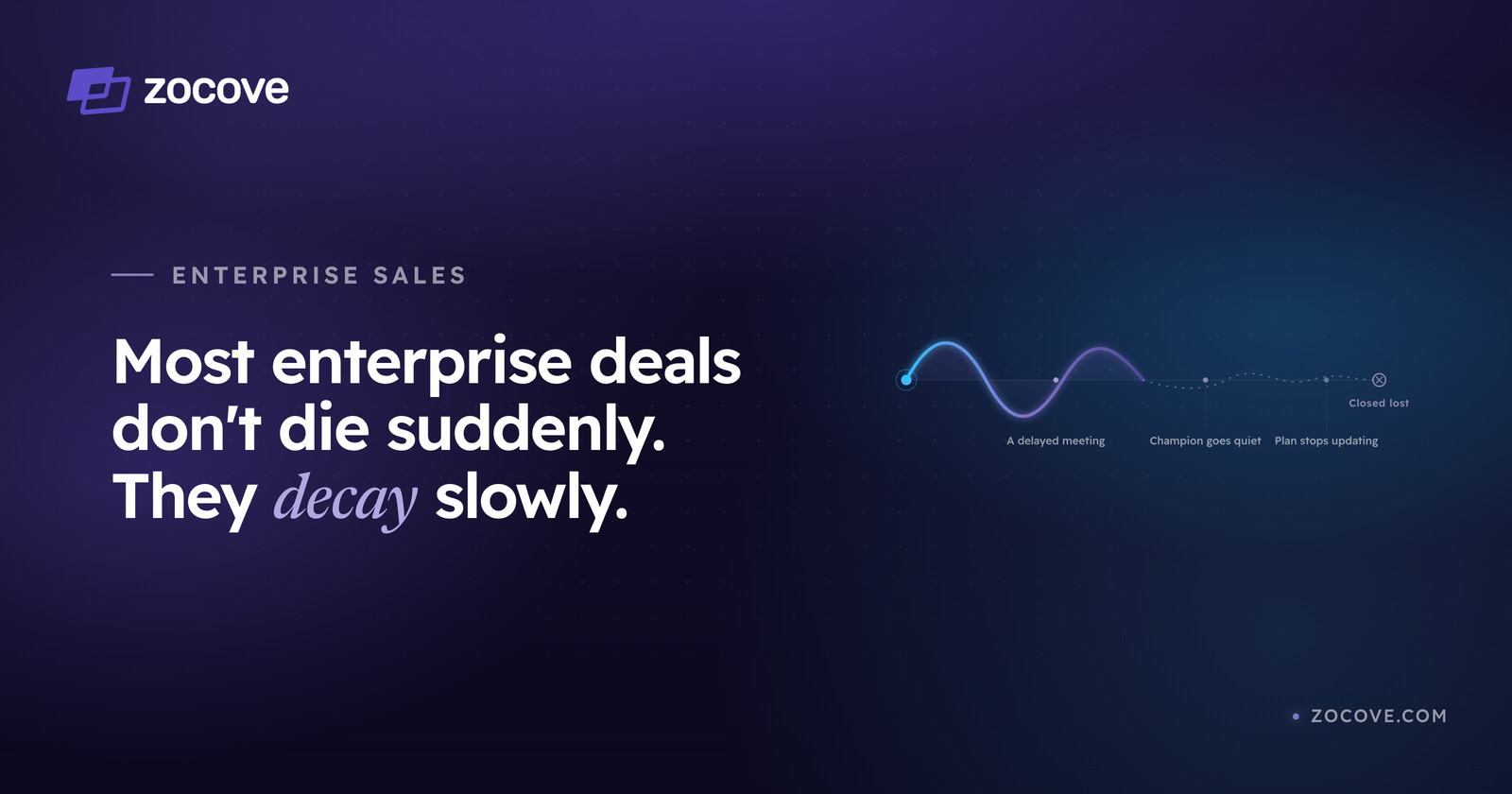
Most enterprise deals don't die suddenly.
They decay slowly.
A meeting slips. A stakeholder stops replying. The mutual action plan goes stale. Your champion gets harder to reach. None of it shows up in the CRM.
By the time a deal gets pushed to next quarter or marked Closed Lost, the warning signs have been visible for weeks. The hard part of enterprise selling isn't knowing a deal has stalled. It's catching it while it's starting to.
The illusion of momentum
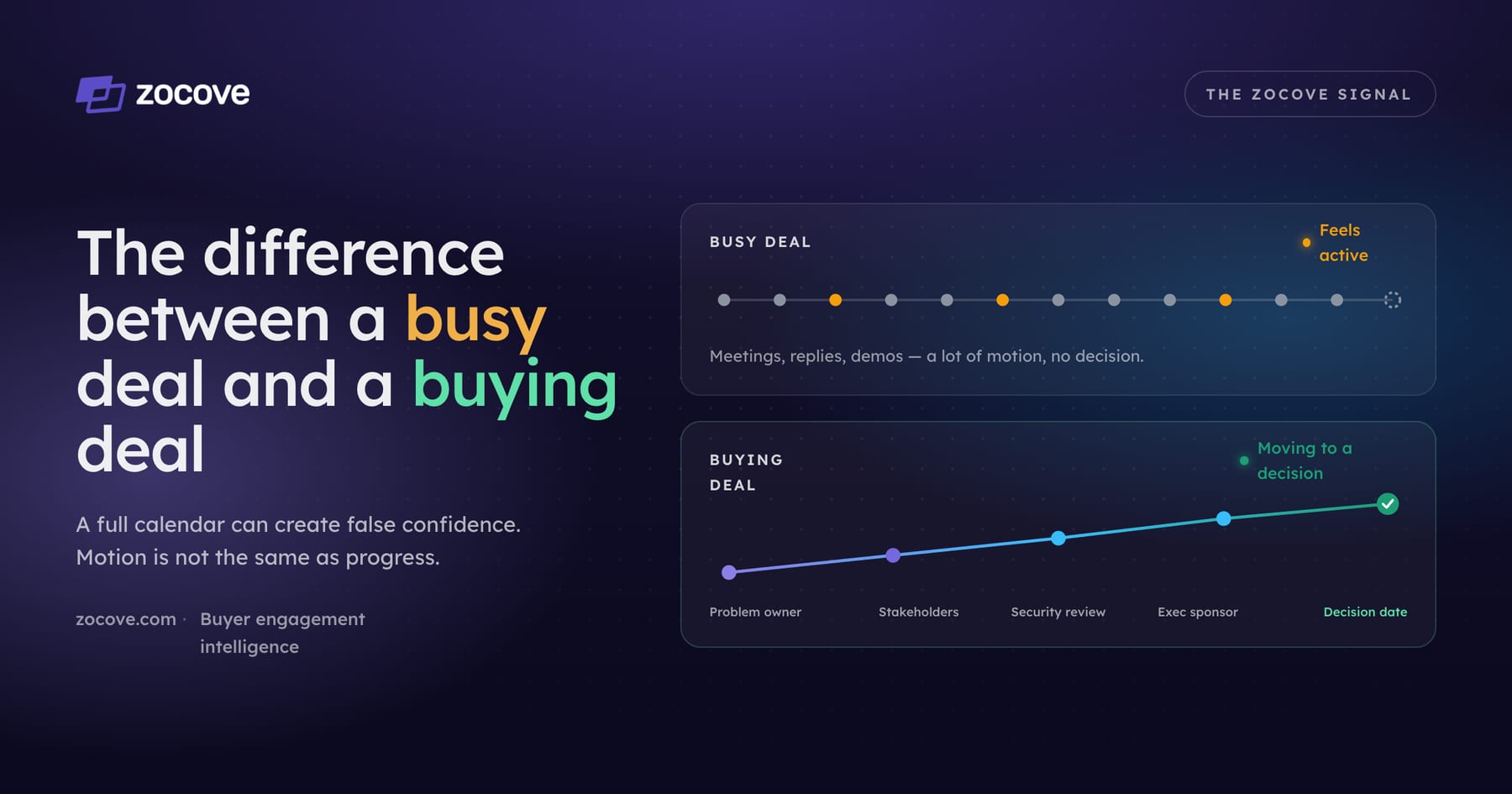
Most teams read deal health off lagging indicators. How many meetings happened? When was the last email? What stage is it in? What does the forecast say? Useful questions — but they only tell you what you've already done.
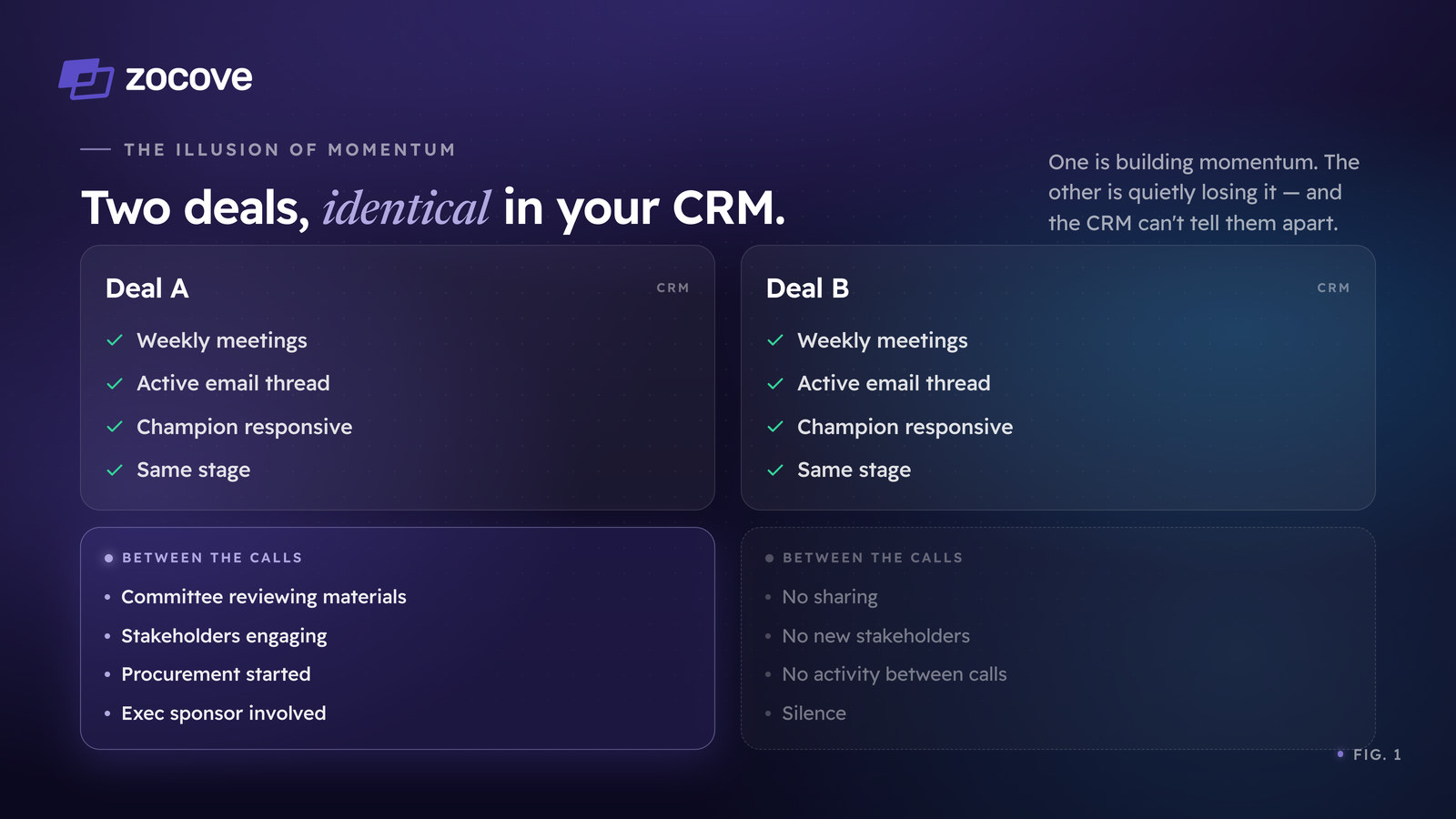
Take two deals:
Deal A — weekly meetings, active email thread, responsive champion, same stage.
Deal B — weekly meetings, active email thread, responsive champion, same stage.
In the CRM, they're identical. But between the calls, one looks like this:
- The buying committee is reviewing materials
- Multiple stakeholders are engaging
- Procurement has started its internal review
- An executive sponsor is involved
And the other looks like this:
- No engagement outside the meetings
- Nothing shared internally
- No sign of consensus forming
- Silence between calls
Same CRM record. One deal is building momentum; the other is quietly losing it. You can't tell which from the fields.
The real work happens between the meetings
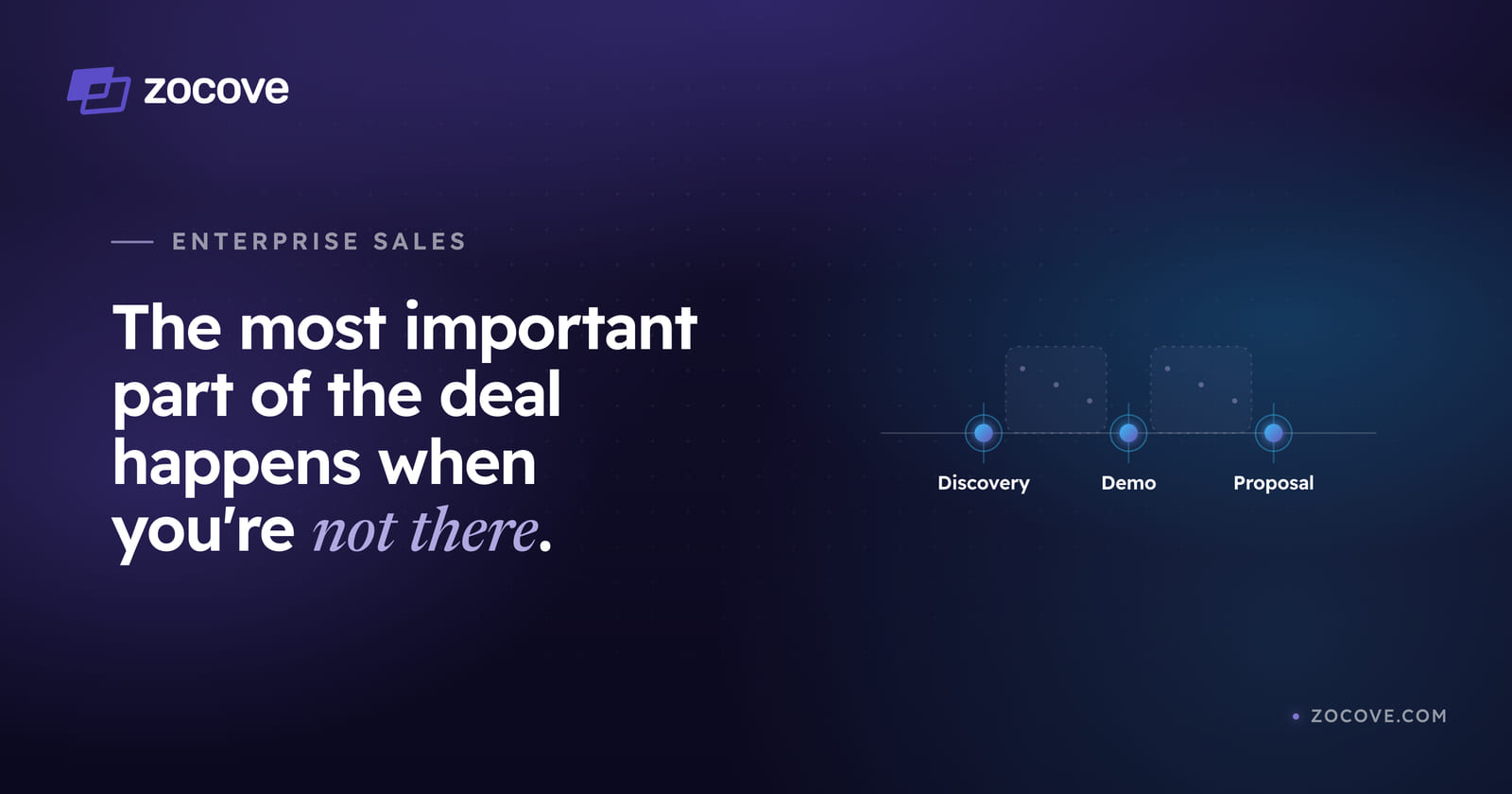
It's tempting to think progress happens in the meeting. Most of it doesn't. The buying process runs while you're not in the room.
After the demo, your buyer is:
- Sharing materials internally
- Debating priorities
- Reviewing budget
- Aligning stakeholders
- Weighing alternatives
- Building the internal business case
That's where the deal is actually decided — and almost none of it is visible to you.
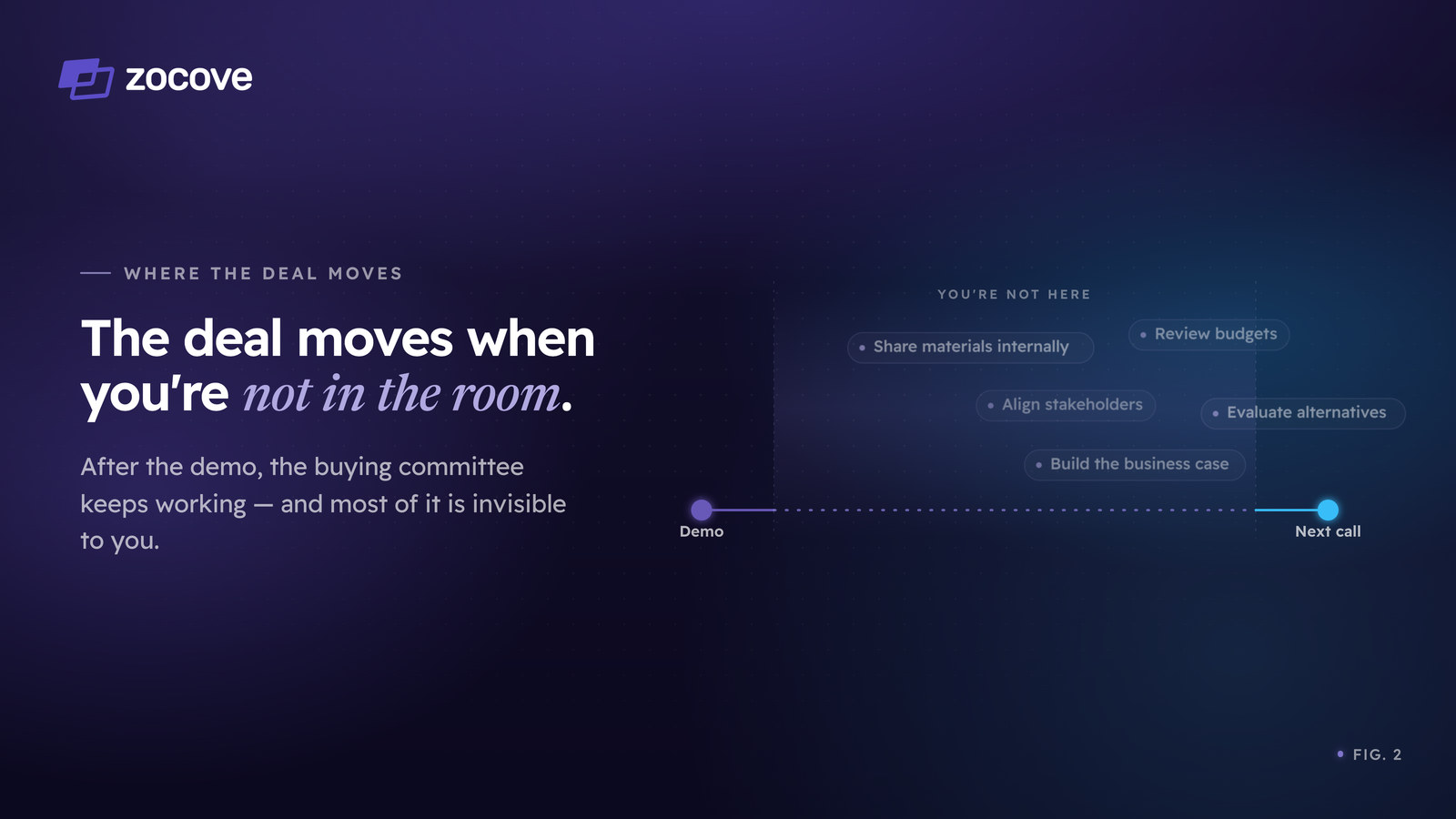
It makes for a dangerous blind spot. You can walk out of a great meeting feeling good while the committee hasn't grown, the key stakeholders haven't engaged, and nobody has touched the materials that move the decision forward. Momentum didn't go up. You just couldn't see that it didn't.
Why deals really stall
Enterprise deals rarely stall on a single event. Momentum erodes — and it usually traces to one of these.
Champion dependency
The whole deal rides on one enthusiastic person. They go on leave, change roles, or get reprioritized, and progress falls off a cliff.
Stakeholder gaps
The decision-makers who matter never engage. The deal looks healthy until legal, procurement, finance, security, or an exec shows up late with new concerns.
No internal alignment
Each stakeholder sees the value on their own, but nobody has built consensus. The meetings continue; the decision doesn't.
No shared plan
Without clear owners, dates, and accountability, "next steps" are suggestions, not commitments.
Invisible disengagement
Buyers stop reviewing materials and participating between meetings long before they stop showing up to them. You still see activity. The deal is already decaying.
From activity to engagement
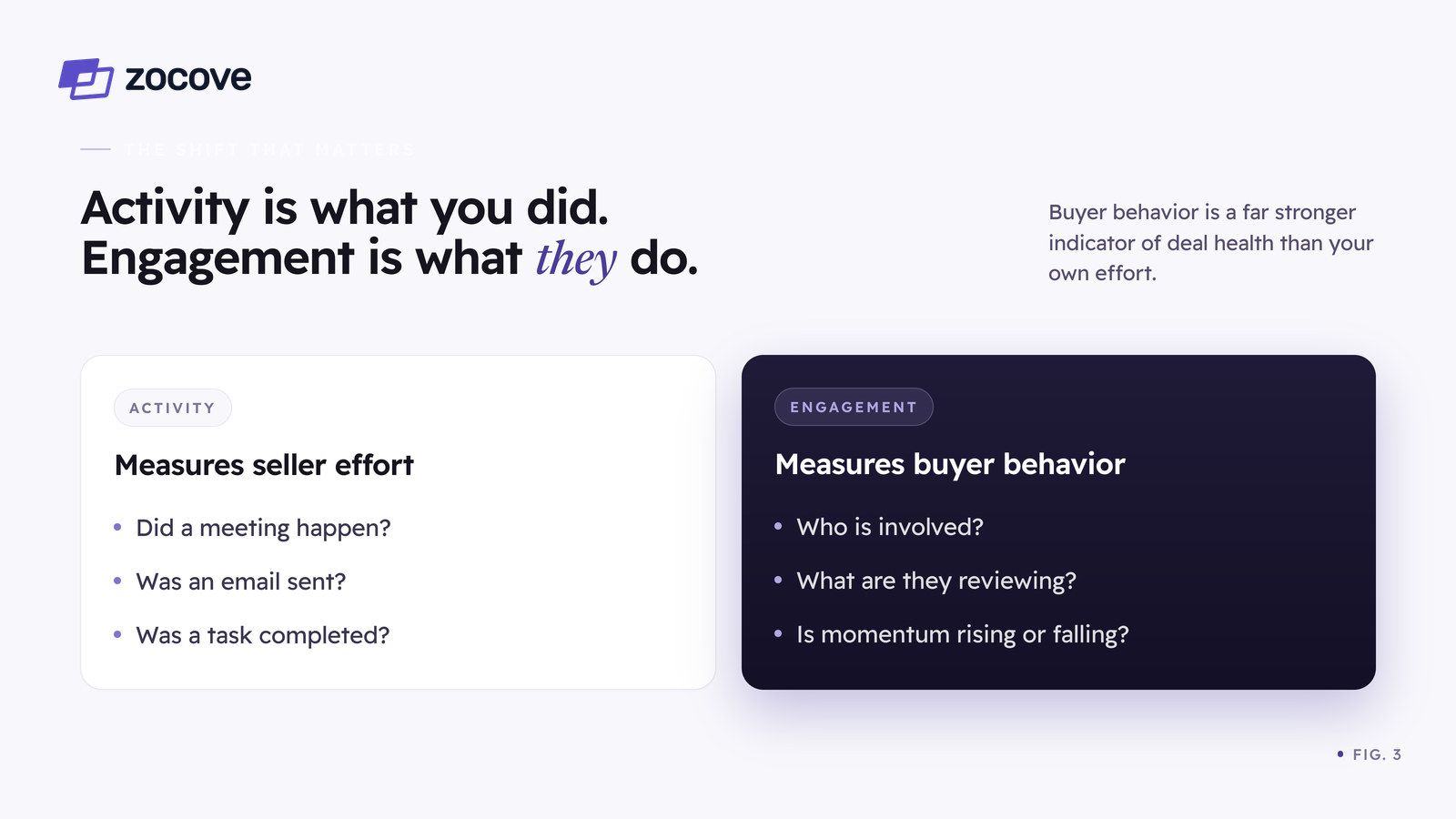
Traditional pipelines measure activity. The best teams measure engagement. The difference is the whole point.
Activity asks: did a meeting happen? was an email sent? was a task closed?
Engagement asks: who's involved? what are they reviewing? how often are they participating? which stakeholders are shaping the decision? is momentum rising or falling?
Activity measures your effort. Engagement measures your buyer's behavior — and that's the far better read on deal health.
The best sellers watch signals, not stages
Top sellers don't wait for a forecast review to find a problem. They watch for signals:
- New stakeholders joining the conversation
- Content being shared internally
- Steady participation across the committee
- Real progress against the mutual action plan
- A bump in engagement before a key milestone
- A previously active stakeholder going quiet
These show up weeks before a deal formally slips. The earlier you catch them, the more you can still do.
Building visibility into the buying process
CRMs were built to manage opportunities, not to show you what buyers do between meetings. That's the gap.
A buyer–seller workspace closes it. Instead of relying only on what you type in, you can fold buyer engagement signals into how you inspect a deal — stakeholder participation, content engagement, collaboration, progress toward shared goals — and get a clear read on deal health before it ever reaches the forecast.
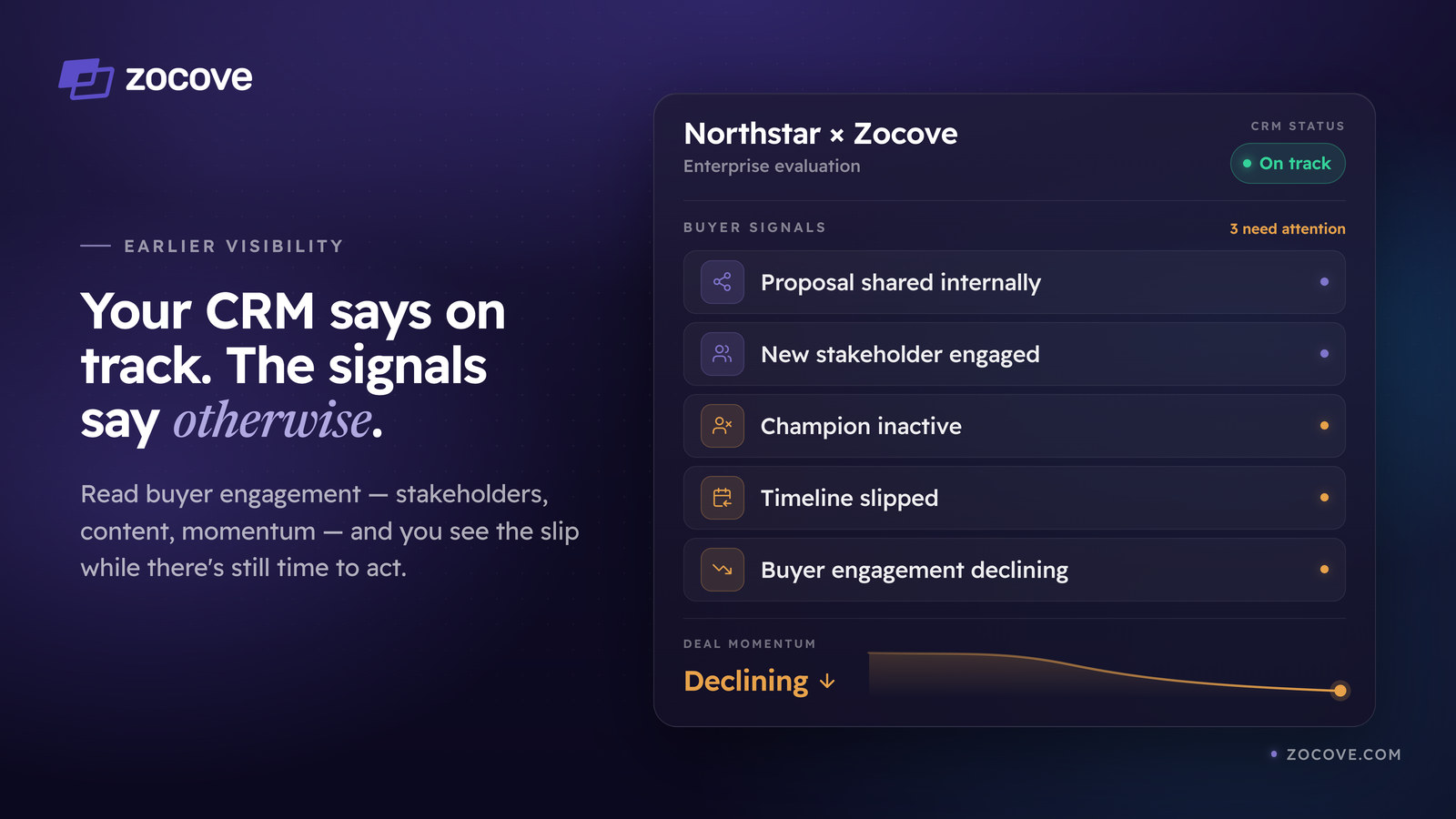
The point isn't just better visibility. It's earlier visibility. In enterprise sales, timing is the whole game.
Final thoughts
Deals don't usually die on one bad meeting. They die because momentum quietly drains away while everyone assumes things are on track.
The teams that consistently outperform aren't running more meetings or sending more email. They're better at seeing what happens when they're not in the room. Because by the time a deal officially stalls, the warning signs were there all along — someone just had to be watching.