The most important part of the deal happens when you're not there
You spend an hour in the room. The deal is decided in the hours you're not — buyer time. Why the invisible work between meetings is where deals are really won and lost.
 6 min read
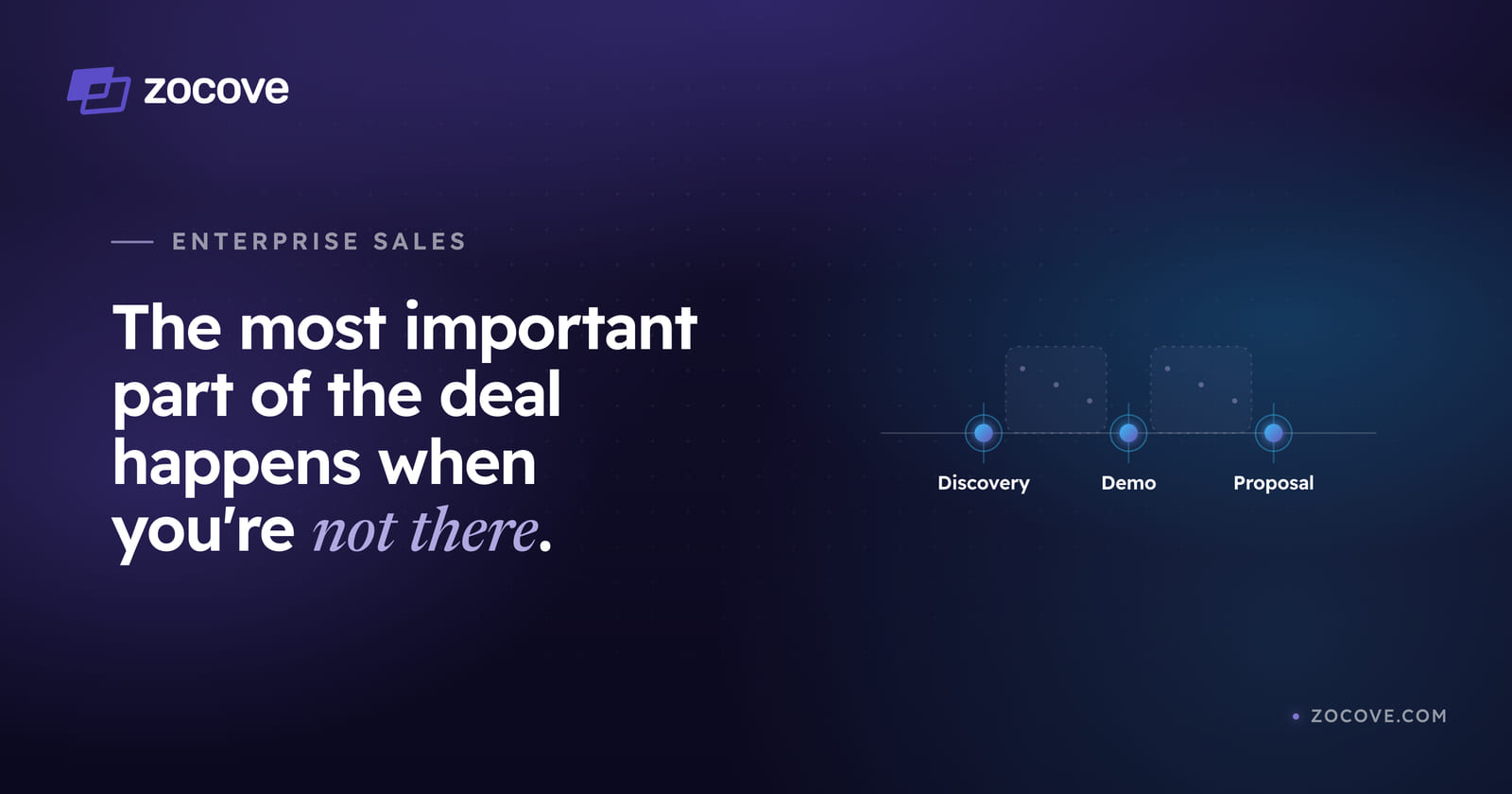
You spend an hour with a prospect. The meeting goes well — questions answered, the demo lands, next steps agreed. Everyone leaves feeling productive.
Then the real buying process begins.
After the call ends, the buyer compares alternatives, reviews materials, weighs risk, builds the business case, loops in stakeholders, and works toward approval. Those conversations decide whether the deal moves. Most sellers never see a single one of them. It's the biggest blind spot in enterprise sales: you pour your energy into optimizing meetings, while your buyer spends far more time making the decision between them.
The meeting is not the buying process
Most sales methodologies are built around seller moments — discovery, demo, proposal, negotiation, close. Those milestones matter, but they're a thin slice of the actual buying journey. A single enterprise purchase runs through dozens of internal conversations you're never in: stakeholders debating priorities, finance pressure-testing the budget, security assessing risk, an exec weighing it against three other initiatives, procurement reviewing vendors.
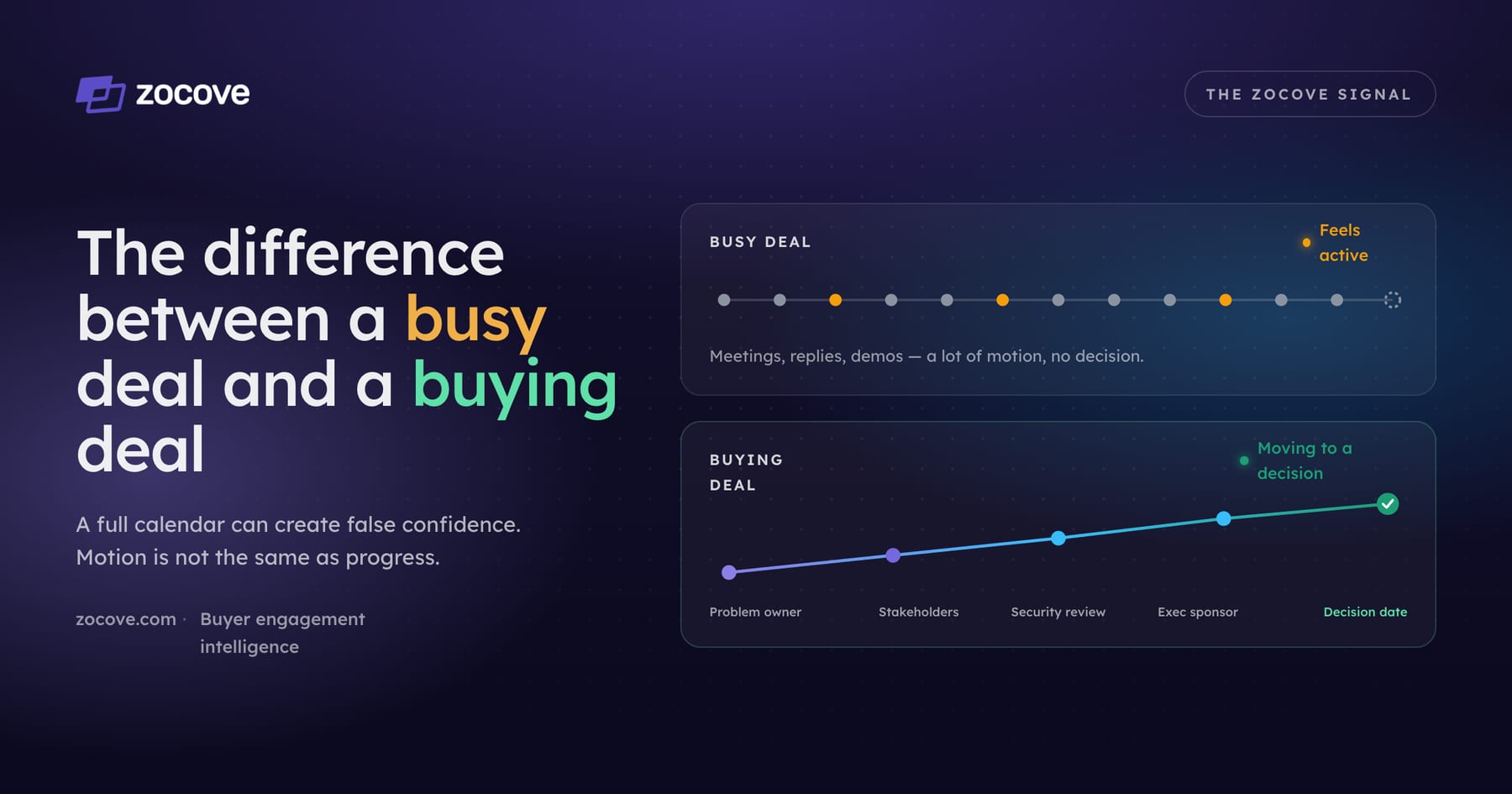
The trap is mistaking meeting activity for buying progress. They are not the same thing.
Seller time vs buyer time
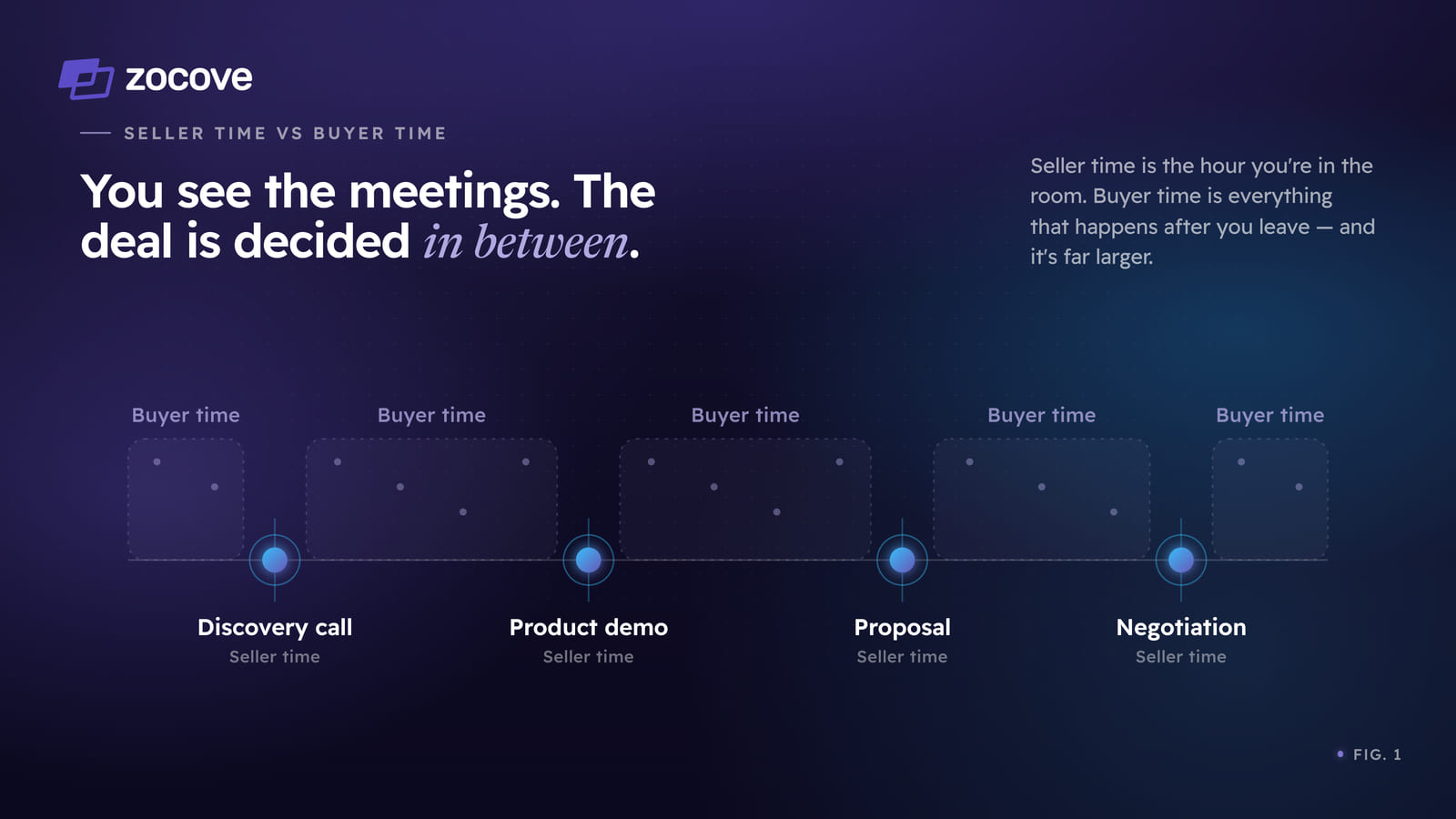
One of the most useful mental models in enterprise sales is the split between seller time and buyer time.
Seller time is the hour you're in the room — discovery calls, demos, follow-ups, commercial conversations, negotiation. It's where attention naturally goes, because it's visible, measurable, and familiar.
Buyer time is everything that happens after you leave — internal alignment, budget reviews, security assessments, procurement evaluations, business-case building, consensus forming. It's where the decision actually gets made. And it's far larger than seller time. The problem is the asymmetry: you have deep visibility into the hour you're present, and almost none into the part that determines the outcome.
Why great meetings create false confidence
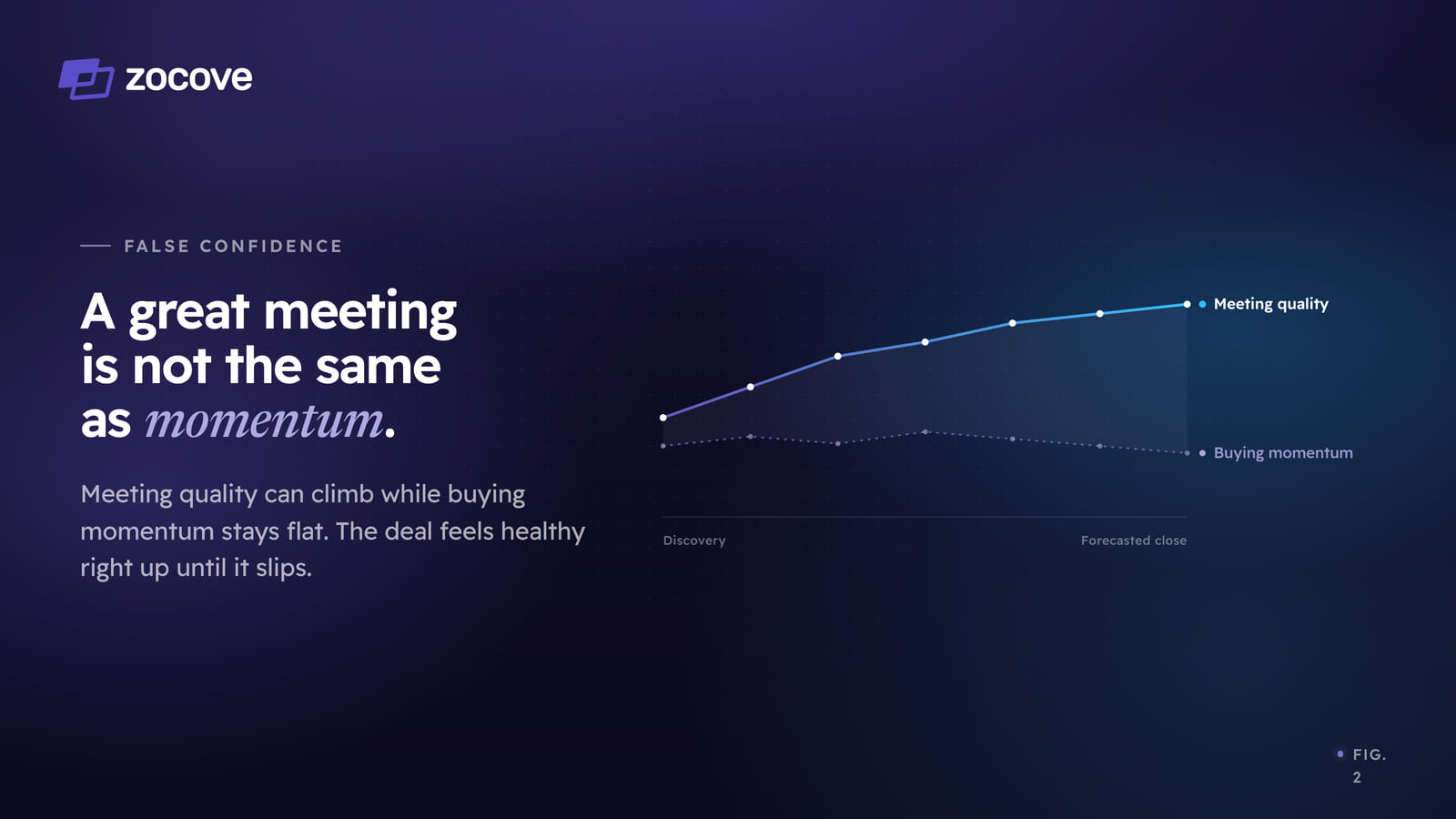
Most sellers have lived through a deal that felt healthy right up until it wasn't. The meetings were productive, the champion was engaged, the feedback was warm, the forecast looked clean — then it slipped. Why? Because meeting quality isn't the same as buying momentum.
A great meeting can sit right alongside no executive sponsor, no new stakeholders, no budget alignment, no procurement readiness, and no internal consensus. You walk out encouraged while the buying organization stays unconvinced. That gap is where false confidence lives — and it widens quietly, because the signal you're reading (how the meeting felt) isn't the signal that decides the deal.
The invisible work of buying
Here's the misconception worth killing: that buying happens during meetings. It doesn't. Meetings facilitate buying — they rarely complete it. The actual work of buying is often harder than the work of selling. Your buyer has to align stakeholders, build consensus, justify the spend, manage risk, fend off alternatives, defend priorities, and navigate internal politics. A champion who loves your product still has all of that ahead of them. In a lot of organizations, the internal sale is tougher than the external evaluation — and you can't see any of it.
Picture a $250,000 deal. The champion is excited, the demo went well, the business case looks strong, meetings stay on schedule. Then six weeks pass with little visible movement. You start to worry. The buyer goes quiet. What happened?
Usually, a lot — just not where you can see it. Legal is reviewing terms, security is working through requirements, finance is validating assumptions, execs are arguing priorities, procurement is comparing options. You see inactivity. The buyer sees a full plate of work. Without a read on buyer time, you can't tell healthy evaluation apart from a deal that's starting to slip.
The visibility problem
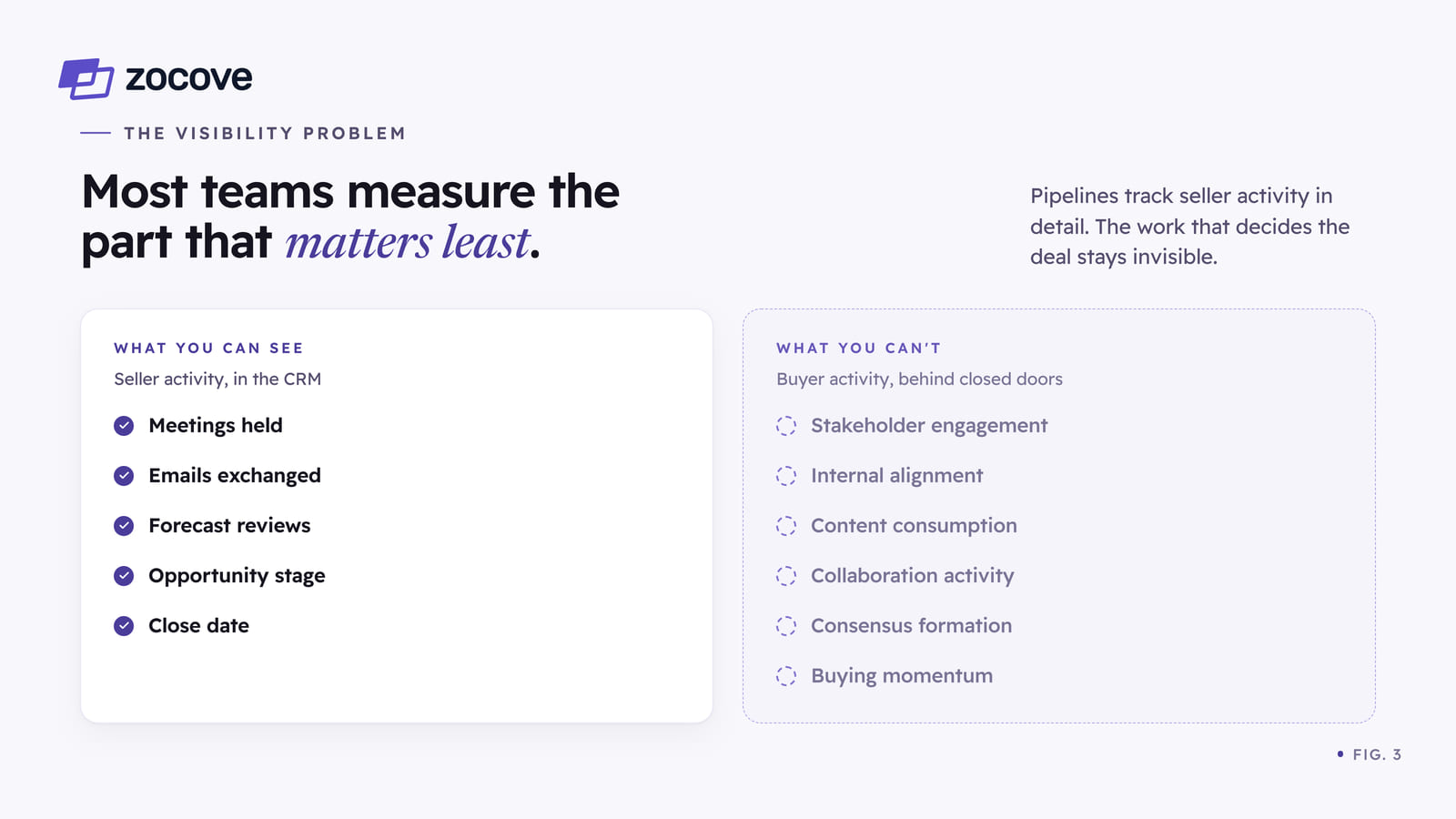
Most sales orgs can see meetings, emails, forecasts, opportunity stages, and close dates. Very few can see stakeholder engagement, internal alignment, content consumption, collaboration, consensus, or buying momentum. One column is seller activity inside the CRM. The other is buyer activity behind closed doors — and it's the one that decides the deal.
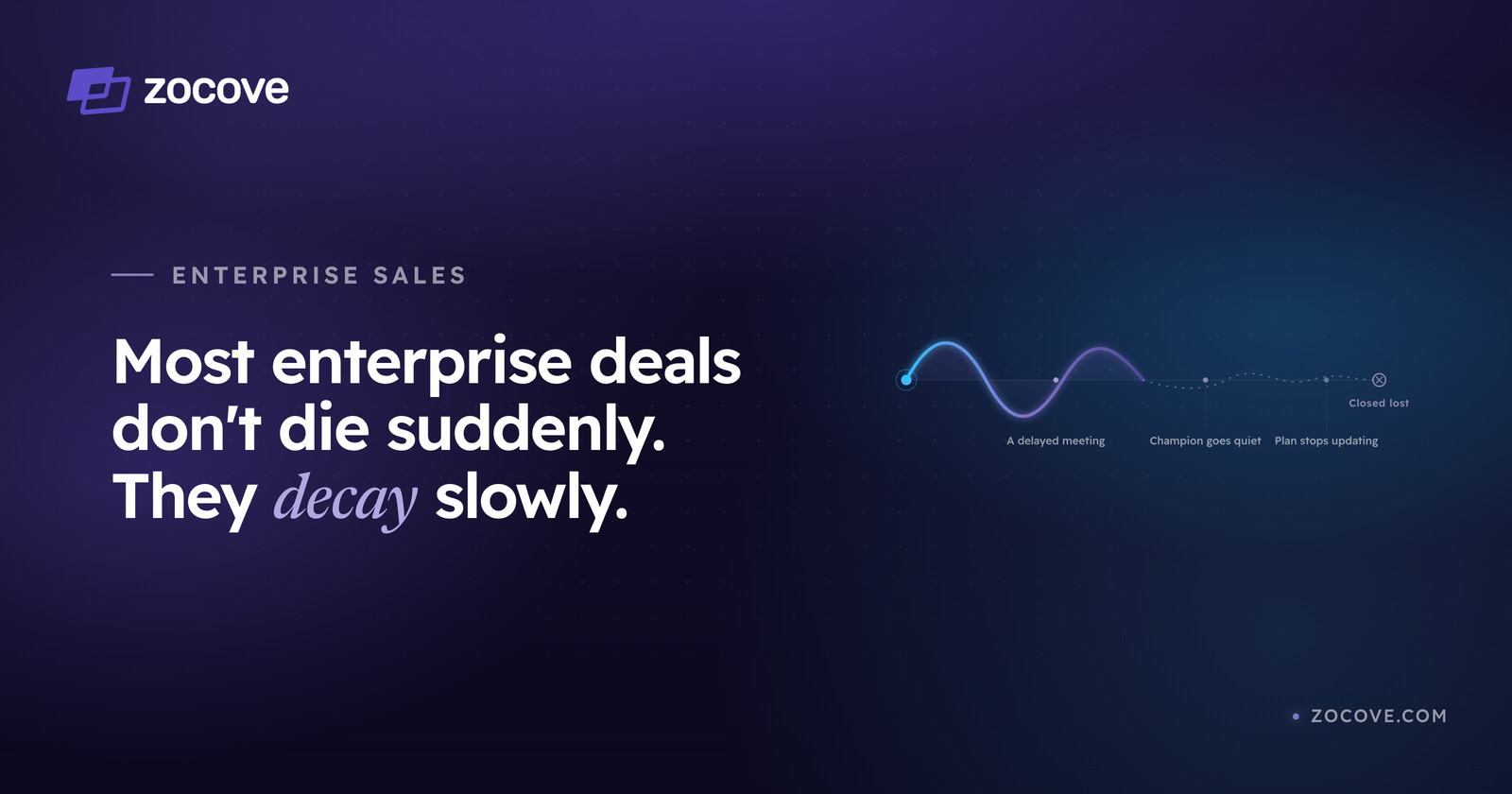
That asymmetry is the whole problem. By the time a deal officially slips, the underlying issue has usually been there for weeks. The warning signs existed. Nobody could see them.
Between meetings, engagement is the signal
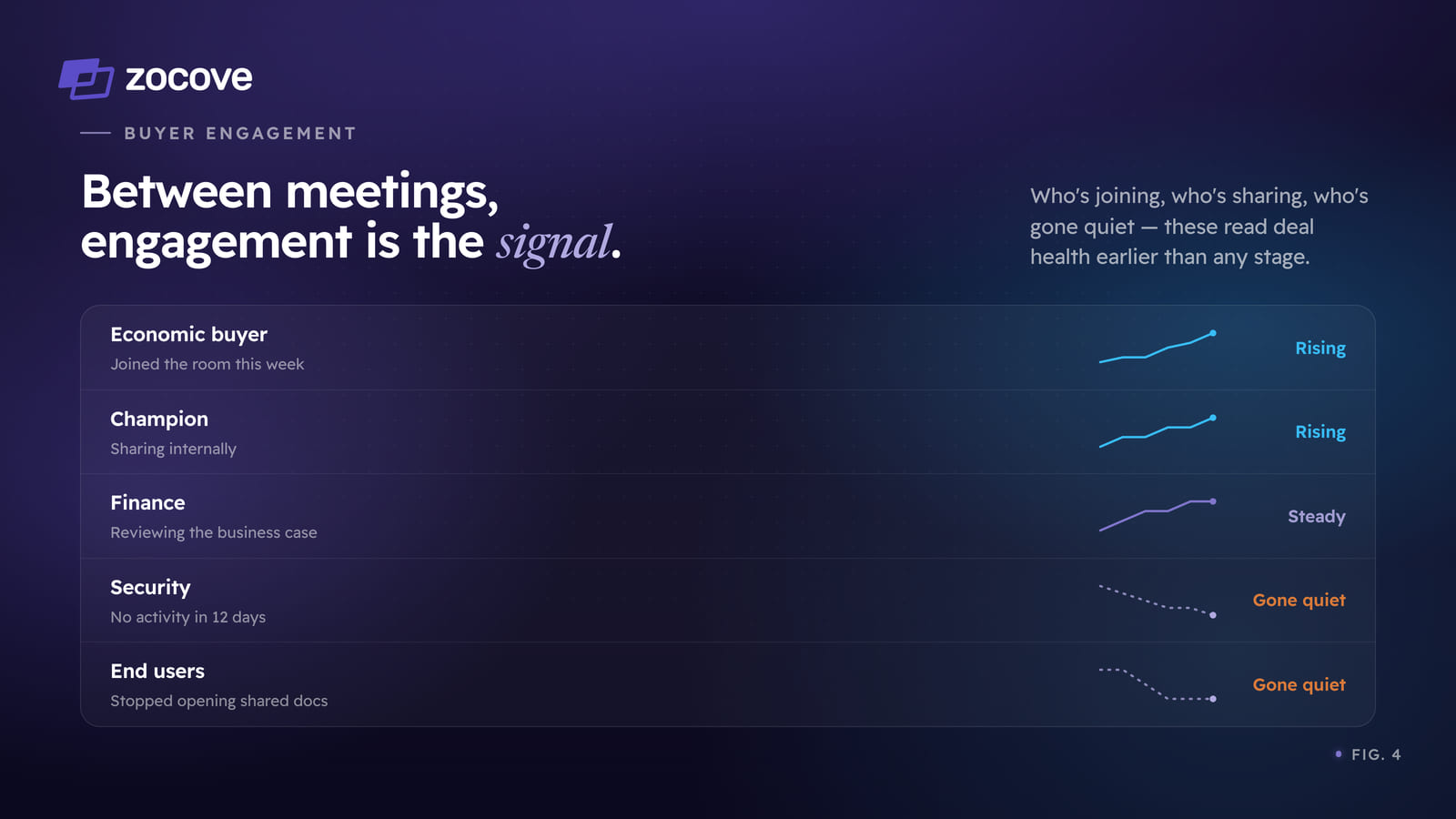
The strongest sellers figure out that visibility between meetings is often worth more than visibility during them. Instead of fixating on their own activity, they read buyer engagement: who's joining the conversation, who's sharing internally, who's reviewing materials, who's gone quiet, and whether collaboration is rising or falling. Those questions surface deal health earlier than any opportunity stage.
Watch the buying committee this way and the picture sharpens fast. The economic buyer joining the room this week and the champion sharing internally read as rising. Finance steadily working the business case reads as steady. Security going dark for twelve days, or end users who've stopped opening the docs you shared, read as gone quiet — weeks before any of it reaches the forecast. Engagement doesn't guarantee a close, but it reveals momentum. And momentum is the thing.
A different mindset
Traditional selling is built around managing opportunities. Modern enterprise selling is built around helping buyers navigate a decision. That shift matters. The best sellers don't just advance a deal — they help an organization reach consensus. So they spend their time building stakeholder alignment, reducing friction, creating clarity, and watching engagement, rather than just booking the next meeting. The goal isn't the next call. It's moving the buying process forward.
And it matters more every year, because enterprise buying keeps getting more complex — more stakeholders, more approvals, more scrutiny on every dollar of software spend. As complexity rises, visibility into buyer time becomes the edge. The teams that understand what happens between meetings catch risk earlier, build alignment faster, and create momentum more consistently. Most of all, they stop getting surprised by outcomes that were predictable all along.
Final thoughts
Most sellers focus on the moments they can see. The strongest sellers focus on the moments they can't — because the most important part of the deal isn't the demo, the proposal, or the negotiation. It's everything that happens after the meeting ends. That's where buying decisions get made, where consensus forms, and where momentum is ultimately won or lost.
The teams that consistently outperform aren't running more meetings. They're better at seeing what happens when they're not in the room — and acting on it while there's still a deal to save. See what's happening in buyer time, and you can read deal health before it ever reaches the forecast.