CRM is a lagging indicator
Your CRM can look healthy while your deal is quietly dying. Why activity isn't progress, and how buyer engagement reveals momentum weeks before the forecast.
 4 min read
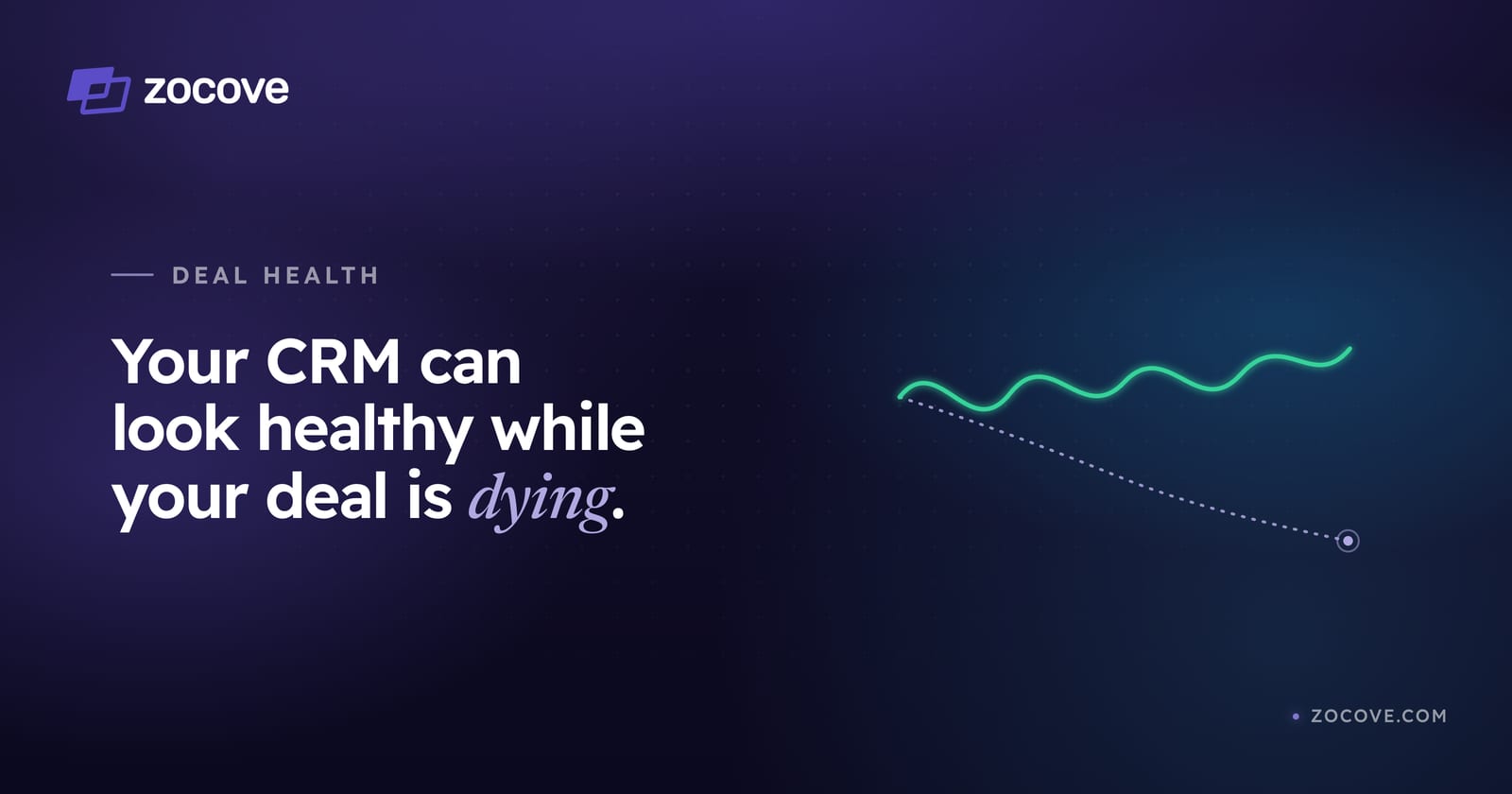
The forecast call is going well. Your biggest deal is still green, the champion's responsive, the last meeting was productive, the next step is on the calendar.
Then the deal slips. Everyone's surprised.
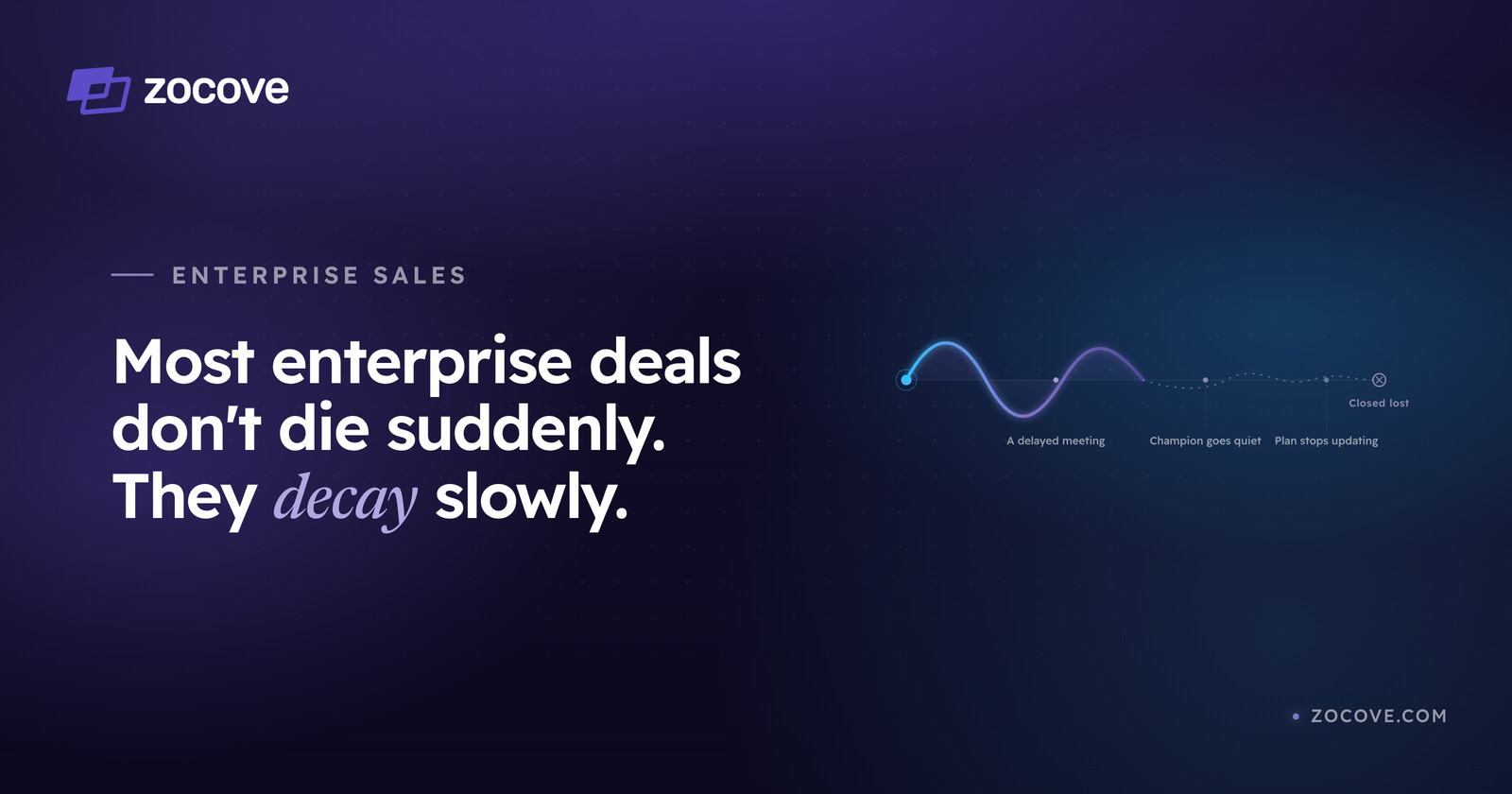
It didn't go unhealthy overnight. The warning signs were already there — your CRM just wasn't built to show them.
For decades, the CRM has been the system of record for sales. It manages pipeline, forecasts revenue, enforces process, and creates accountability. None of that is going away. But as buying gets more complex, the gap shows:
Your CRM tells you what happened. It struggles to tell you what's happening.
The problem isn't CRM
CRM isn't broken. We've just asked it to answer questions it was never built for.
It's great at organizing sales activity — what stage is the deal in, when was the last meeting, what's the forecast category, what's the close date, what are the next steps. Important questions. But often not the one you actually need:
What's happening inside the deal right now?
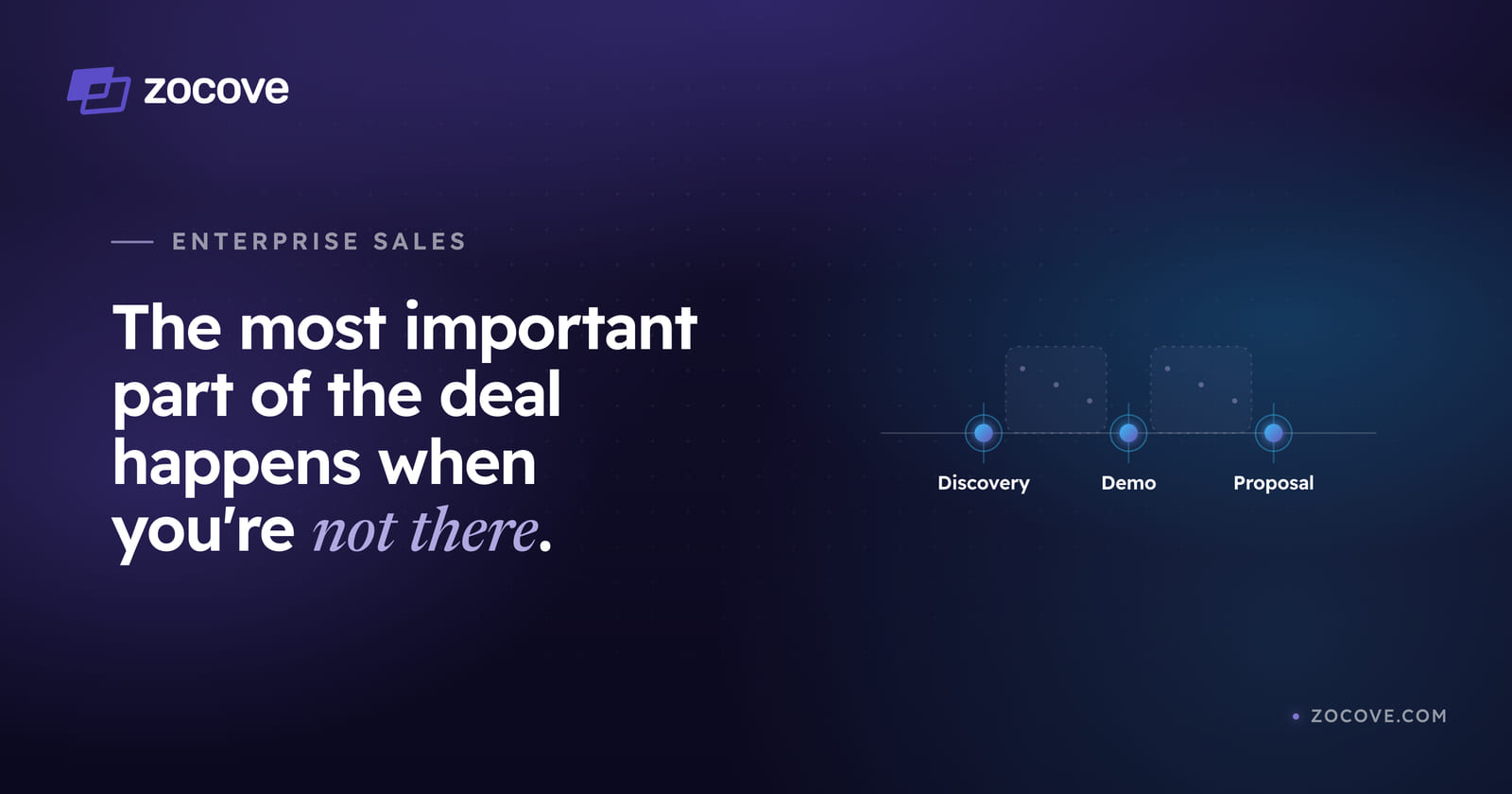
That answer rarely lives in the CRM. The CRM records seller activity. Deals are decided by buyer behavior. Those are not the same thing.
The deal health gap
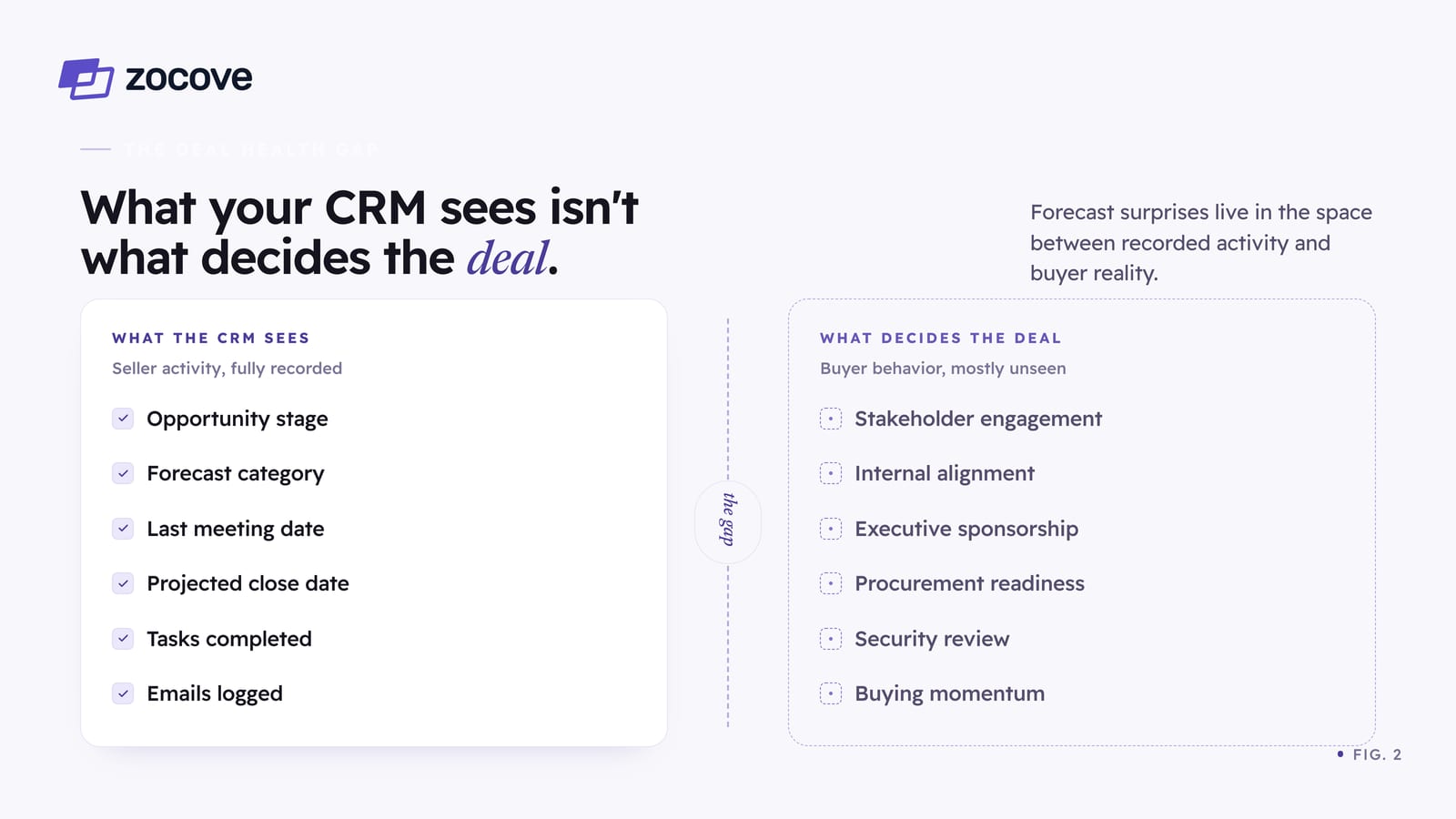
There's a blind spot at the center of enterprise sales — call it the deal health gap. It's the distance between what the CRM can see and what actually decides the deal.
What the CRM sees:
- Meetings
- Emails
- Forecast category
- Opportunity stage
- Close date
- Tasks completed
What decides the outcome:
- Stakeholder engagement
- Internal alignment
- Executive sponsorship
- Procurement readiness
- Security reviews
- Consensus forming
- Buying momentum
Forecast surprises live in that gap. A deal can look healthy on the CRM side while quietly getting more fragile on the buying side.
Activity is not progress
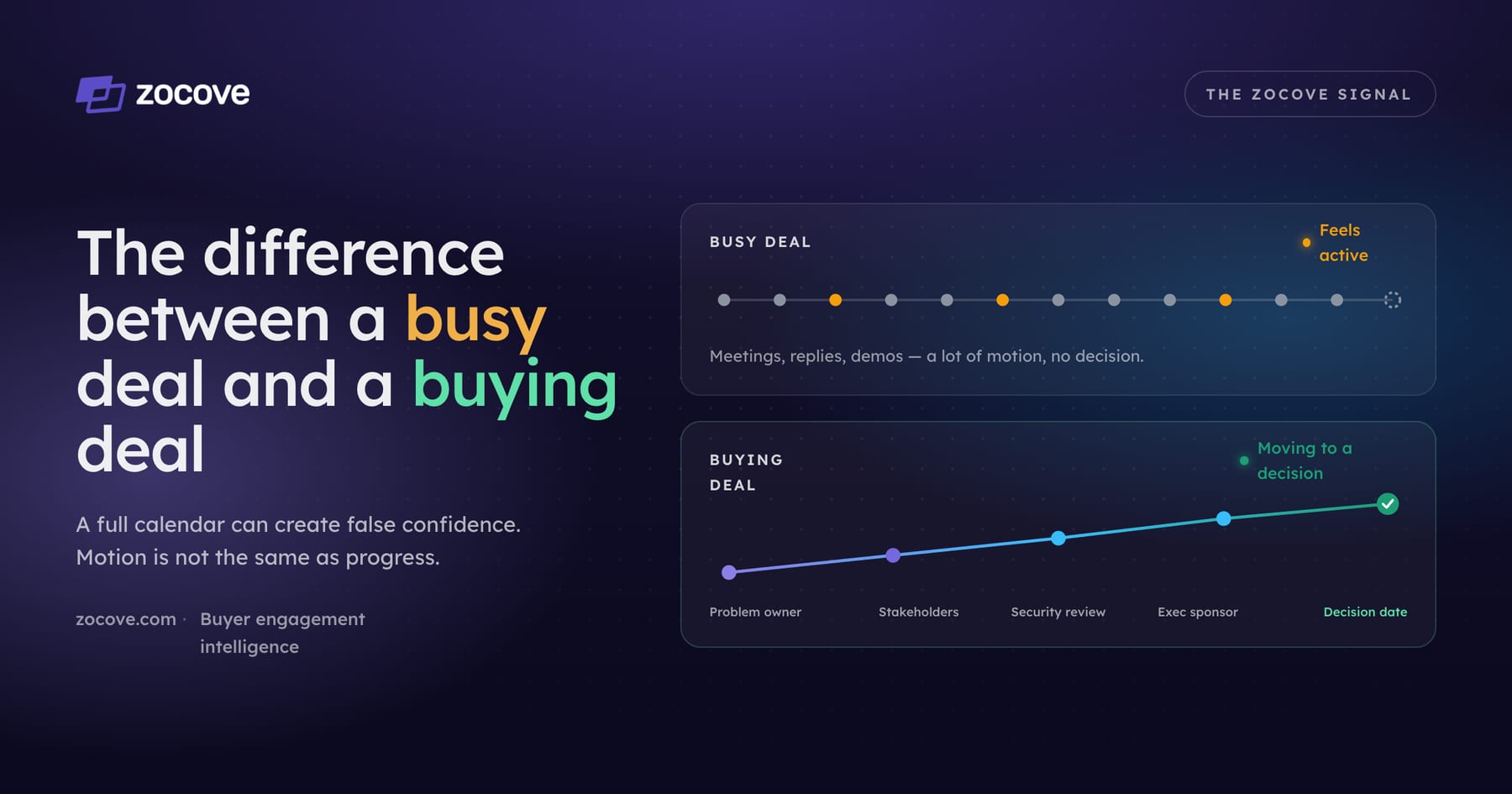
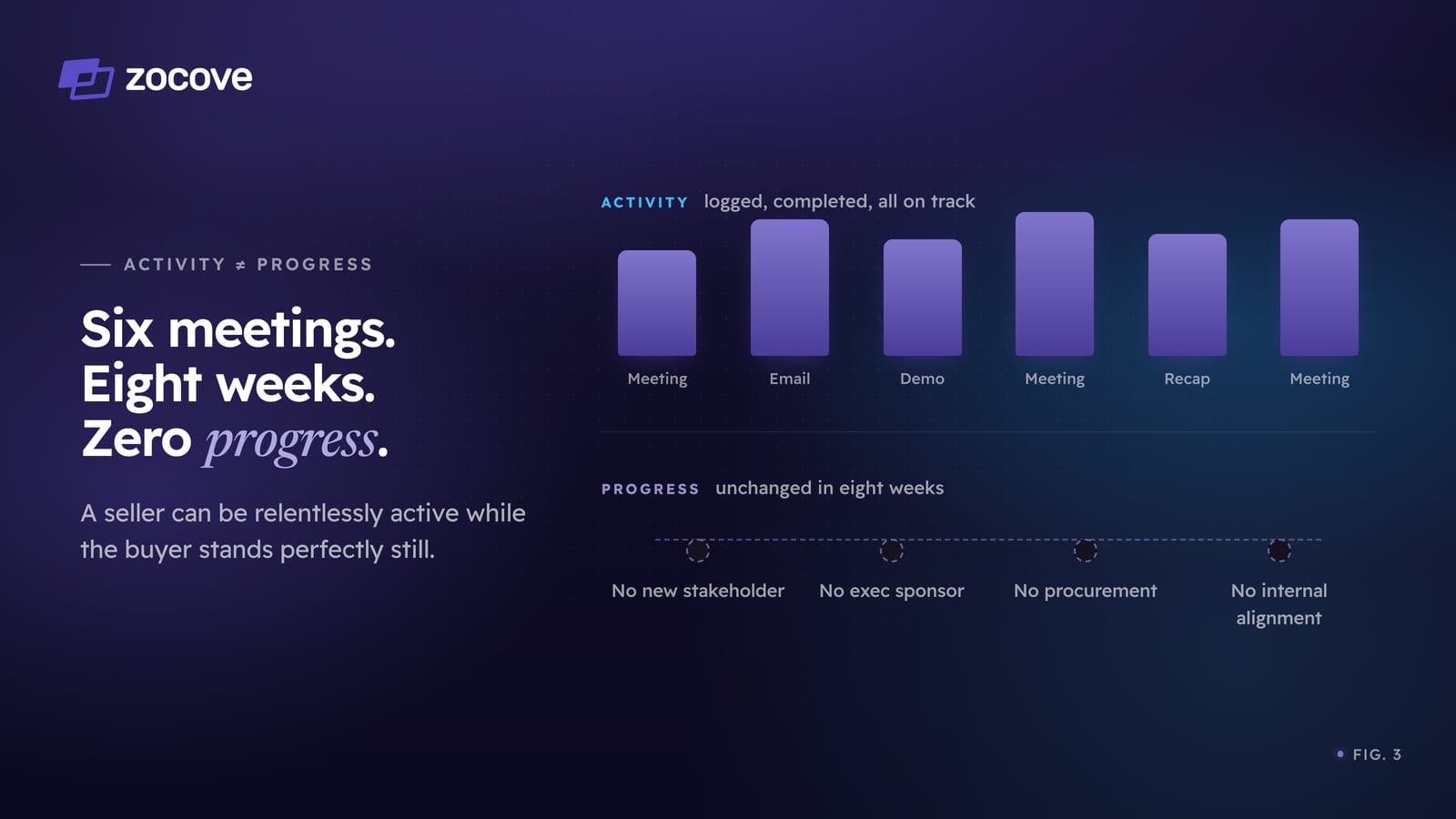
The most common mistake in enterprise sales is confusing activity with progress. They're not the same.
Activity: meeting completed, email sent, demo delivered, proposal shared.
Progress: a new stakeholder engaged, an executive sponsor aligned, procurement kicked off, a security review completed, committee consensus growing.
You can generate a mountain of activity and almost no progress. Picture six meetings over eight weeks. The CRM looks healthy — activities logged, follow-ups done, opportunity still active. And yet: no new stakeholders, no exec sponsor, no procurement, no sign of internal alignment. The seller is busy. The buyer isn't moving.
Leading vs. lagging indicators
The strongest teams know the difference between leading and lagging indicators.
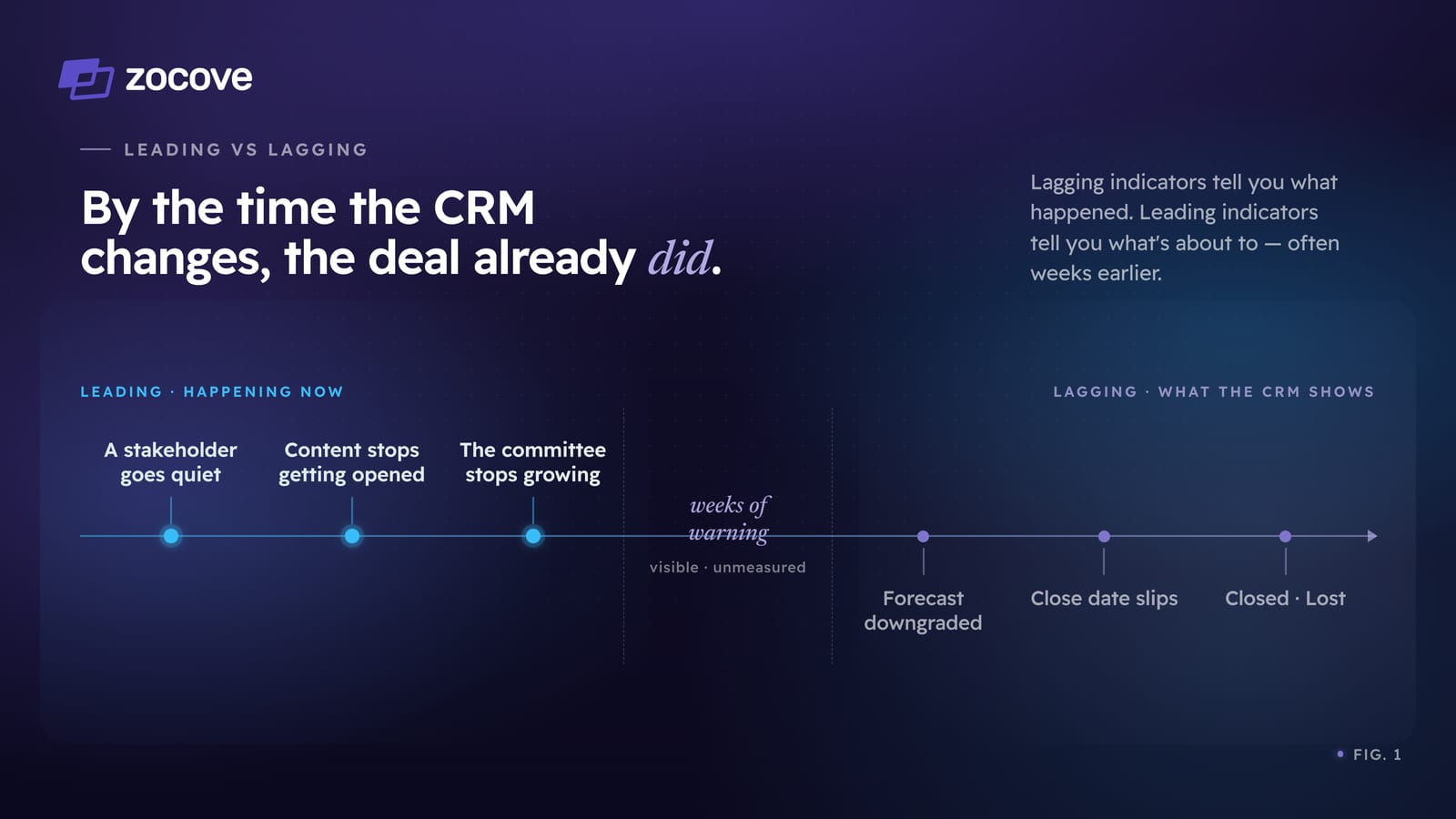
Lagging indicators tell you what already happened — the close date moved, the forecast got downgraded, the deal pushed to next quarter, Closed Lost. Useful, but they arrive after momentum has already turned.
Leading indicators hint at what's coming — stakeholder engagement, content consumption, internal sharing, committee expansion, mutual action plan participation, collaboration. They don't guarantee an outcome, but they reveal momentum shifts weeks before any CRM field changes. The earlier you see the shift, the more you can do about it.
Why forecasts surprise us
Every sales leader has watched a deal look solid right up until it slipped. Most forecast misses aren't really surprises — they're visibility failures. The signals were there. Nobody measured them, or nobody recognized what they meant. The problem was never the forecast. It was leaning on lagging indicators alone.
The missing layer: buyer engagement
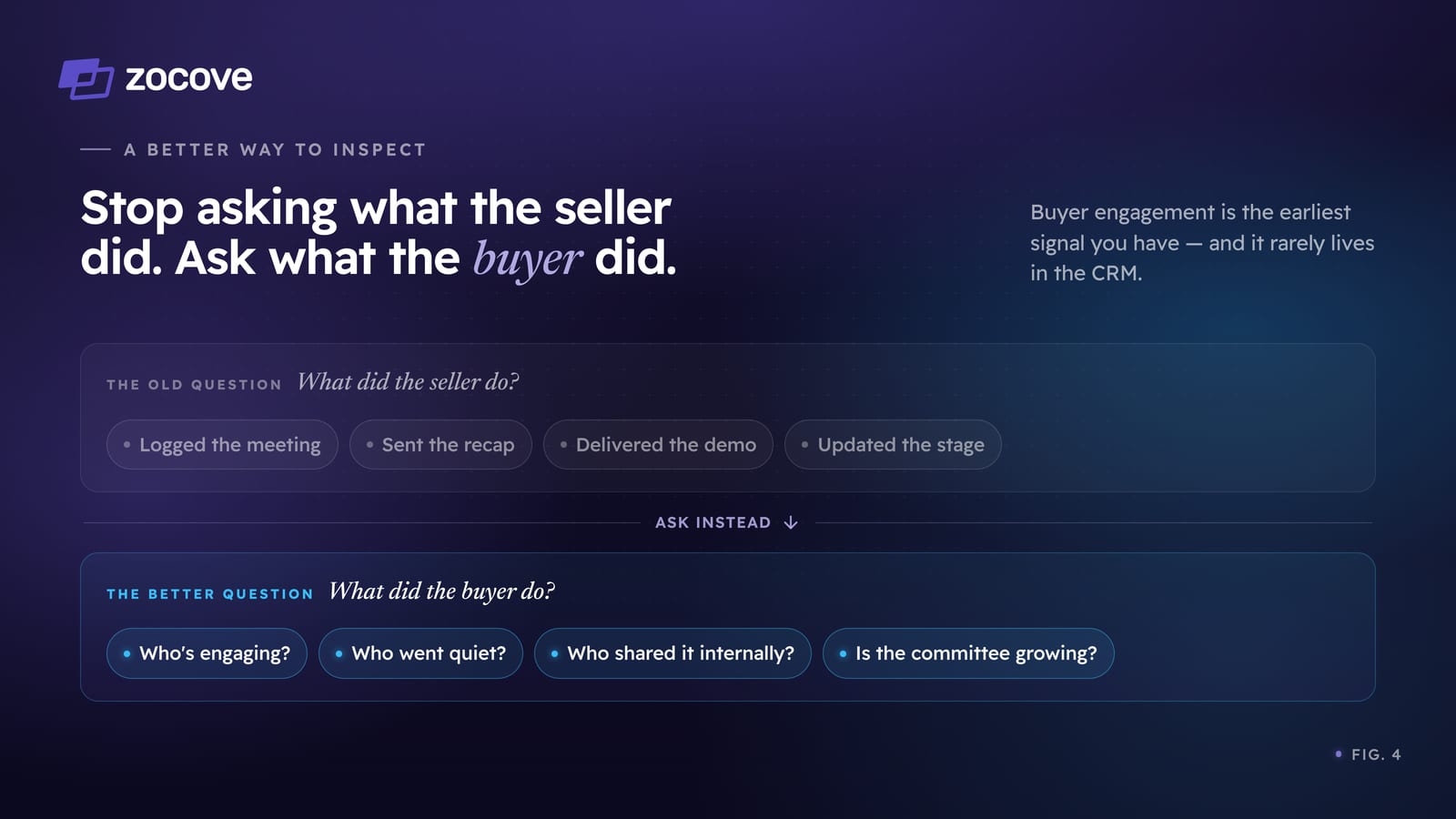
Traditional sales management watches the seller. Modern teams also watch buyer engagement. Instead of asking what the seller did, they ask what the buyer did:
- Who's engaging?
- Who's reviewing content?
- Who's sharing it internally?
- Which stakeholders have gone quiet?
Those answers tend to read deal health more accurately than any stage ever will — and they're usually where teams discover the holes in how they inspect deals.
A better way to inspect deals
Classic deal reviews ask about the close date, the stage, the next meeting, what the customer said. Still worth asking. But complex deals need more:
- Has the buying committee expanded?
- Are new stakeholders engaging?
- Is collaboration increasing?
- Is momentum speeding up or slowing down?
- Are buyers actually consuming what you've shared?
This isn't about replacing the CRM. The CRM gives you structure; buyer engagement gives you visibility. Together they're a real read on deal health.
Final thoughts
The CRM isn't going anywhere — it's essential for forecasting, accountability, and running a tight operation. But it was never meant to tell the whole story.
Your CRM tells you what happened. To see what's happening, you need visibility into buyer engagement, stakeholder activity, and momentum. Because by the time a deal officially slips, the warning signs have usually been there for weeks. The only question is whether anyone was watching.