The internal meeting you'll never be invited to
The most important meeting in an enterprise deal is often the one you'll never attend. How to prepare your champion to carry the conversation when you're not in the room.
 5 min read
Most enterprise sellers know the feeling.
The champion says the internal review is next week. They sound confident. The deal has moved forward. You have the deck, the business case, the security answers, and a good sense of the stakeholders involved.
Then comes the line:
"We'll take this internally and get back to you."
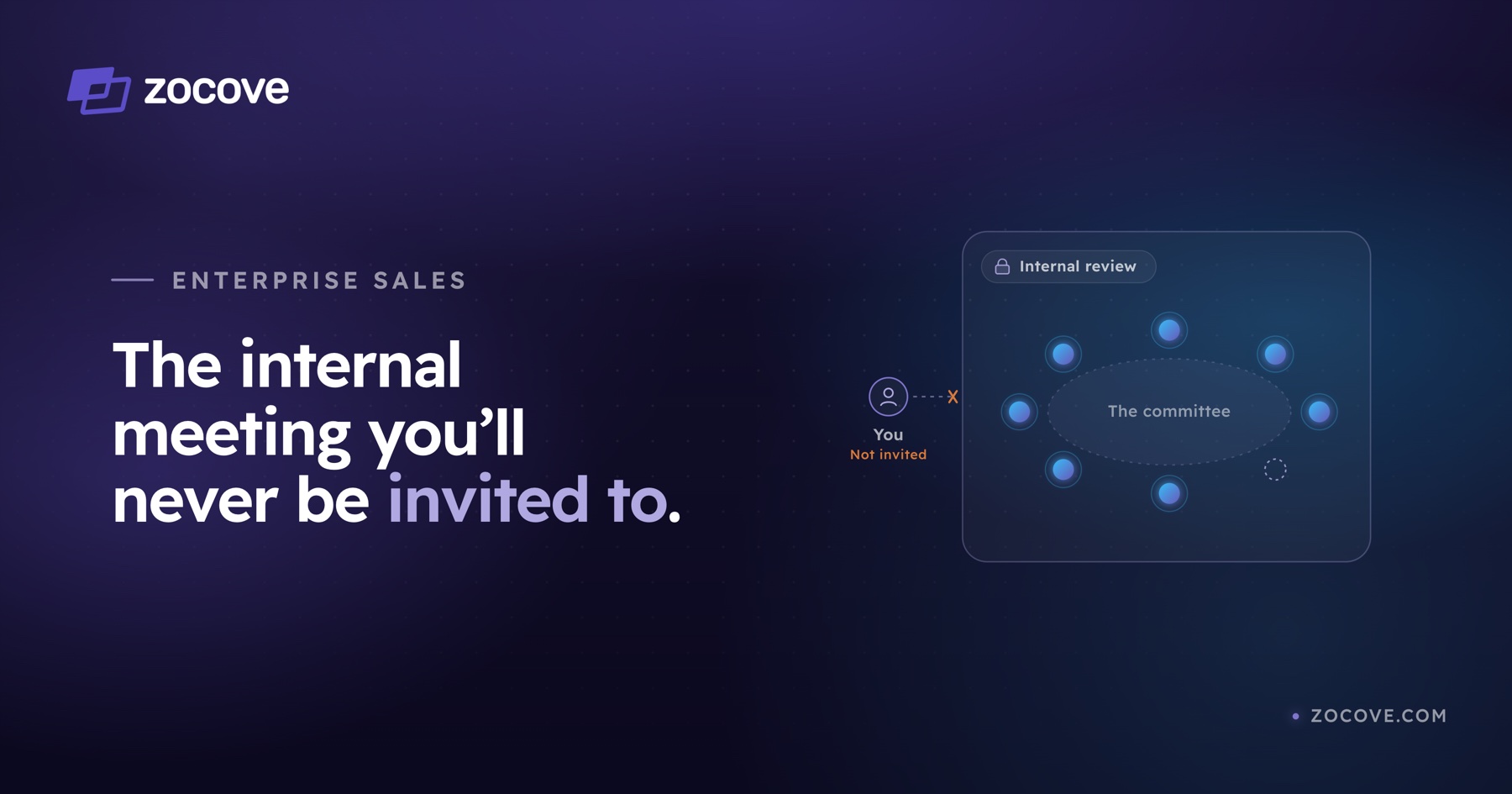
You're not invited. You usually shouldn't be.
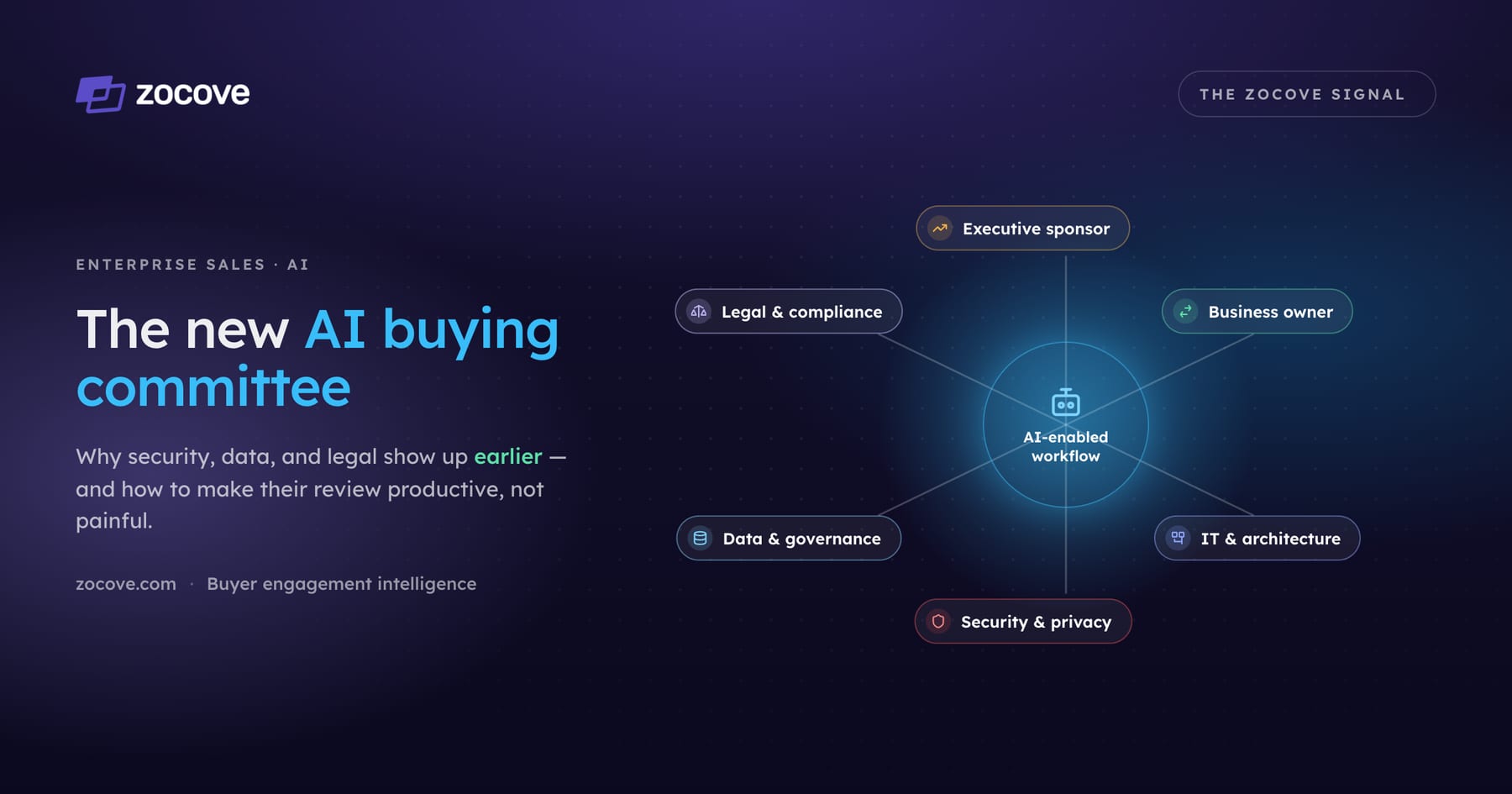
That meeting may include the champion, their manager, finance, IT, security, procurement, an executive sponsor, and someone who hasn't seen your product yet. It may last thirty minutes. It may create three new questions, two objections, and a completely different decision path.
It may also decide the deal.
The internal meeting is not a handoff
A lot of sellers treat an internal buyer meeting as a pause between seller-led conversations. It isn't.
It's the moment when your champion has to do the hardest part of the job: translate what you've shown them into a decision their organization can support.
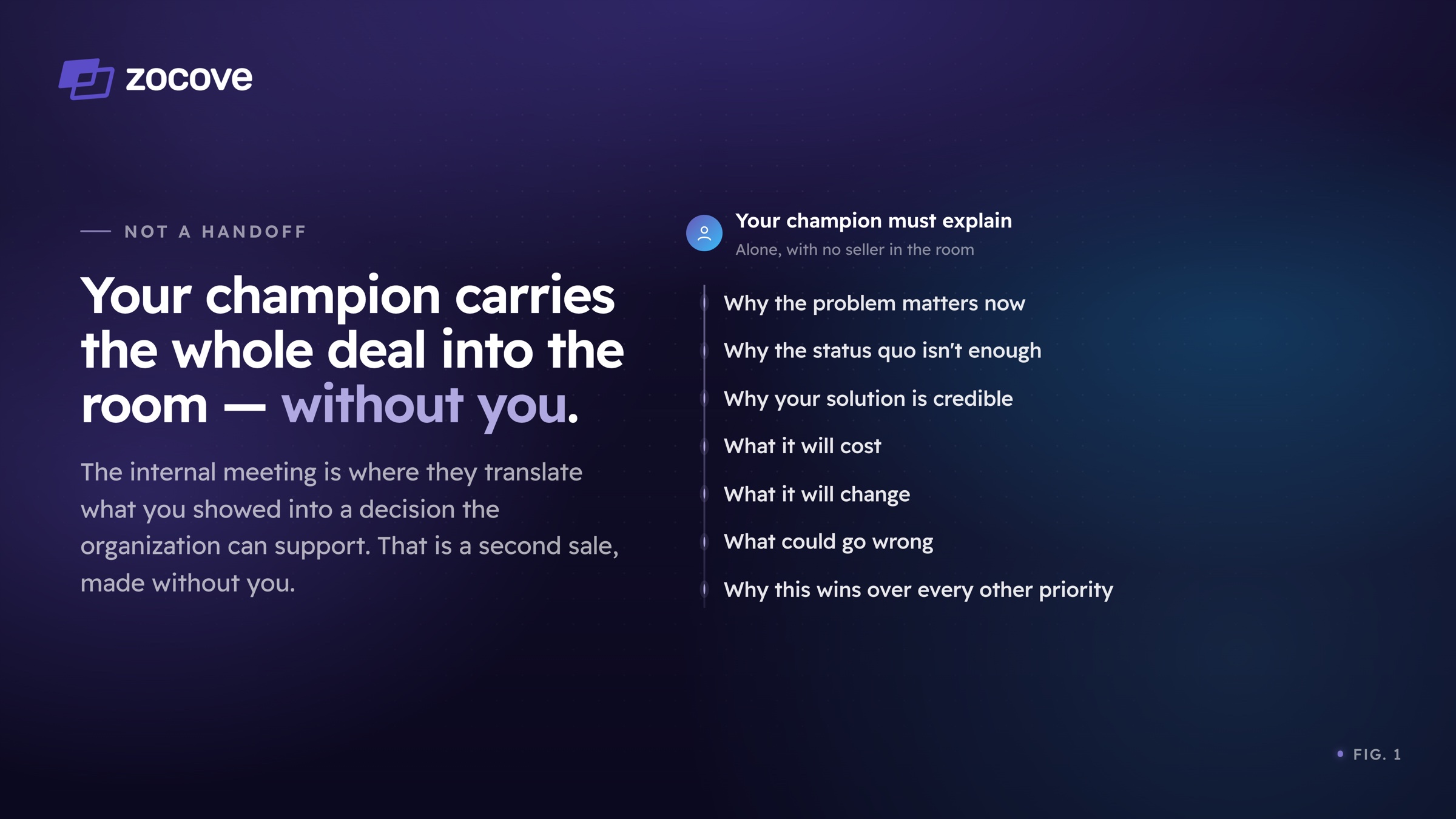
That's an internal sale. And your champion is carrying it without you.
The question isn't whether you can attend. The question is whether you've made them ready.
What your champion needs before the meeting
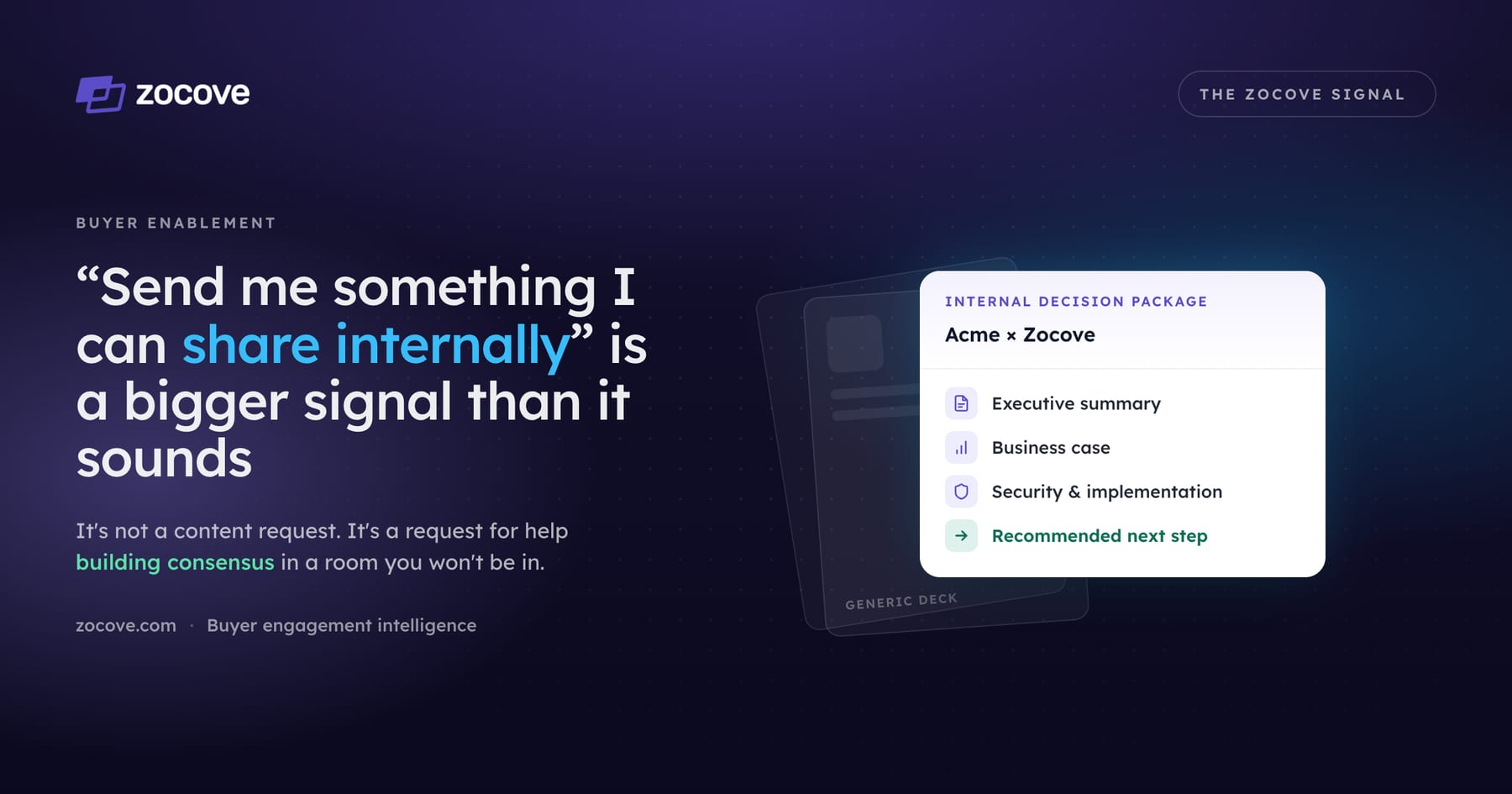
Most internal meetings don't need another full deck. They need decision material.
That distinction matters. A product deck is designed to show your solution. Decision material is designed to help someone else explain, defend, and compare that solution inside their organization.
Before an internal review, your champion should be able to walk in with five things.
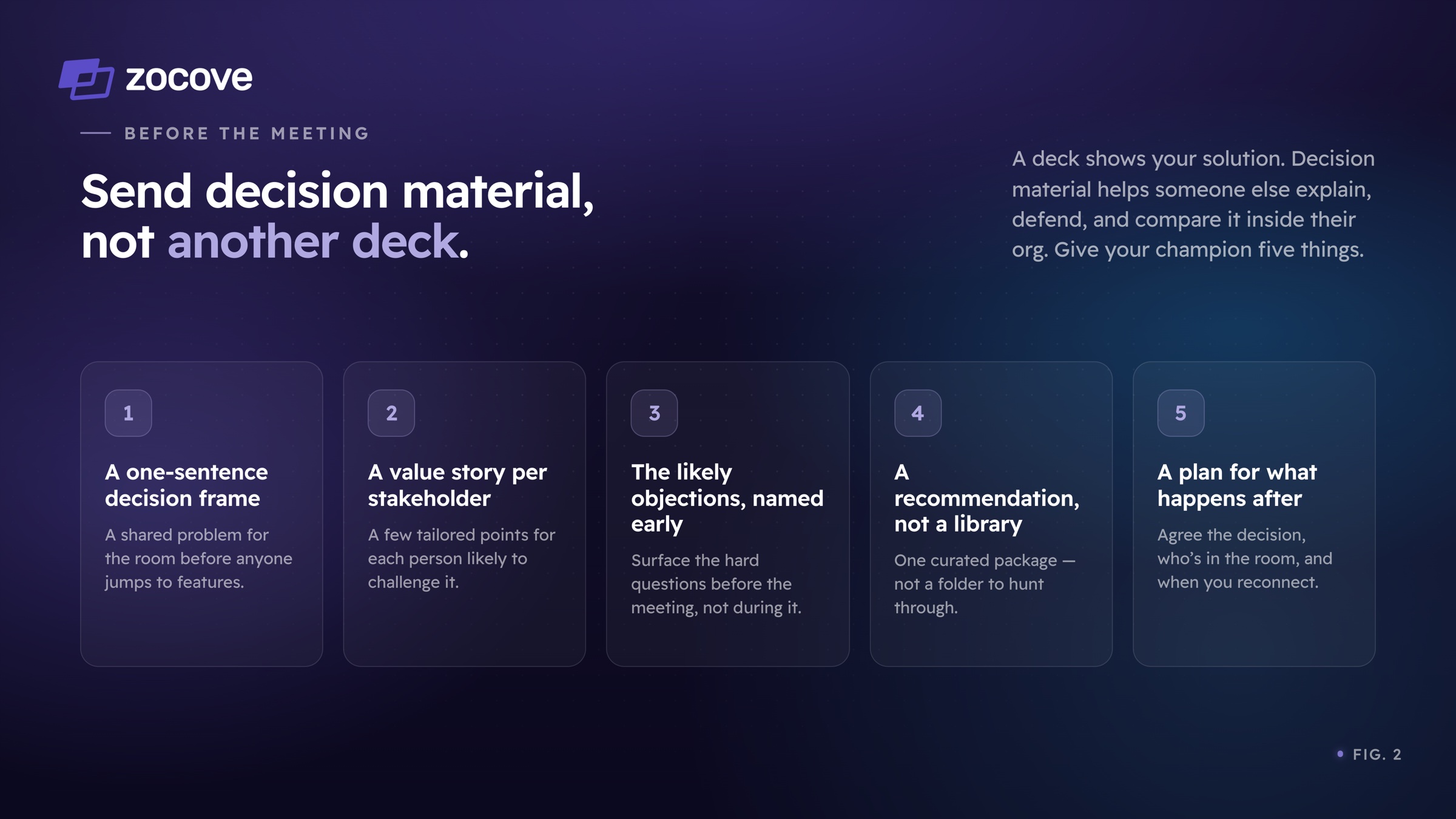
A one-sentence decision frame. Not a value proposition — a decision frame. Something that gives the room a shared problem before anyone jumps to features or vendors.
A stakeholder-specific value story. Finance doesn't need security's story. Procurement doesn't need the business owner's story. Give the champion a few clear points for the people most likely to challenge the decision — not one generic overview everyone has to mentally extract their own version from.
The likely objections, named early. Don't make your champion discover the hard questions in the meeting. Ask what the skeptics will challenge, then help them prepare. When buyers have to chase answers after an internal review, momentum usually slows.
A recommendation, not a library. The internal review shouldn't become a scavenger hunt through shared folders and old email threads. One curated package — executive summary, business case, a relevant product view, a customer example, a clear next step — is far more useful than everything you've ever sent.
A plan for what happens after. Before the meeting, agree on what a positive outcome looks like, who'll be in the room, and when you'll reconnect. If the internal meeting is likely to surface new stakeholders — security, finance, procurement — don't wait a week to start planning for them.
One story per skeptic
Every internal review has a cast. Each person is asking a different version of the same question: why should I vote yes?
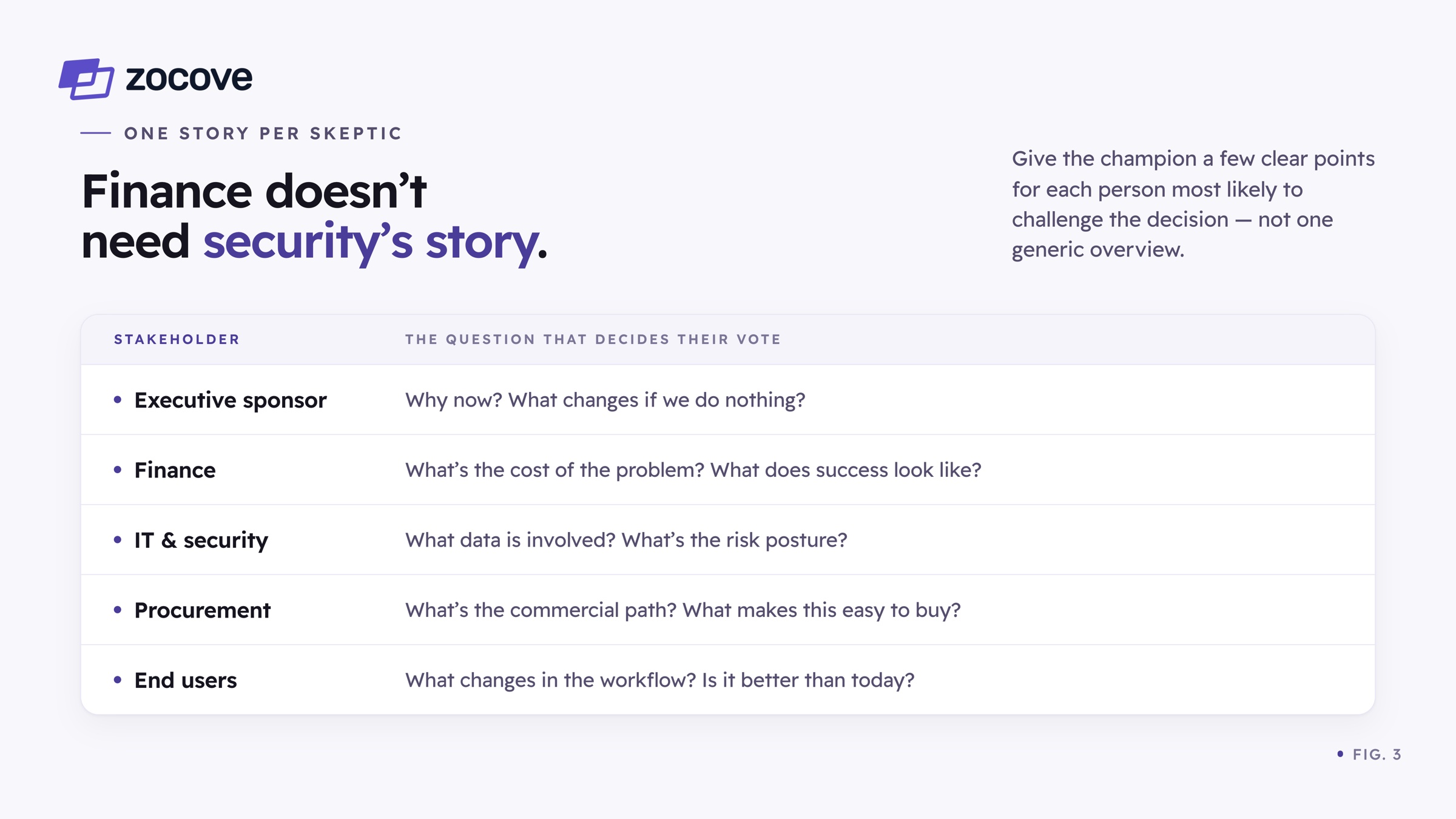
The executive sponsor wants to know why now and what changes if they do nothing. Finance wants the cost of the current problem and what success looks like. IT and security want to know what data is involved and what the risk posture is. Procurement wants a clear commercial path. End users want to know if the workflow actually gets better.
None of these people need a generic overview. They need a clear answer to their specific question — and they need your champion to have it ready before someone asks it out loud. The deals that stall in internal review usually aren't killed by the loudest objection. They're killed by a champion who wasn't ready for it.
The meeting changes the deal, even when you don't hear about it
Here's the practical mistake: a seller hears "internal meeting" and assumes the deal is either progressing or stalled.
It's neither. It's changing.
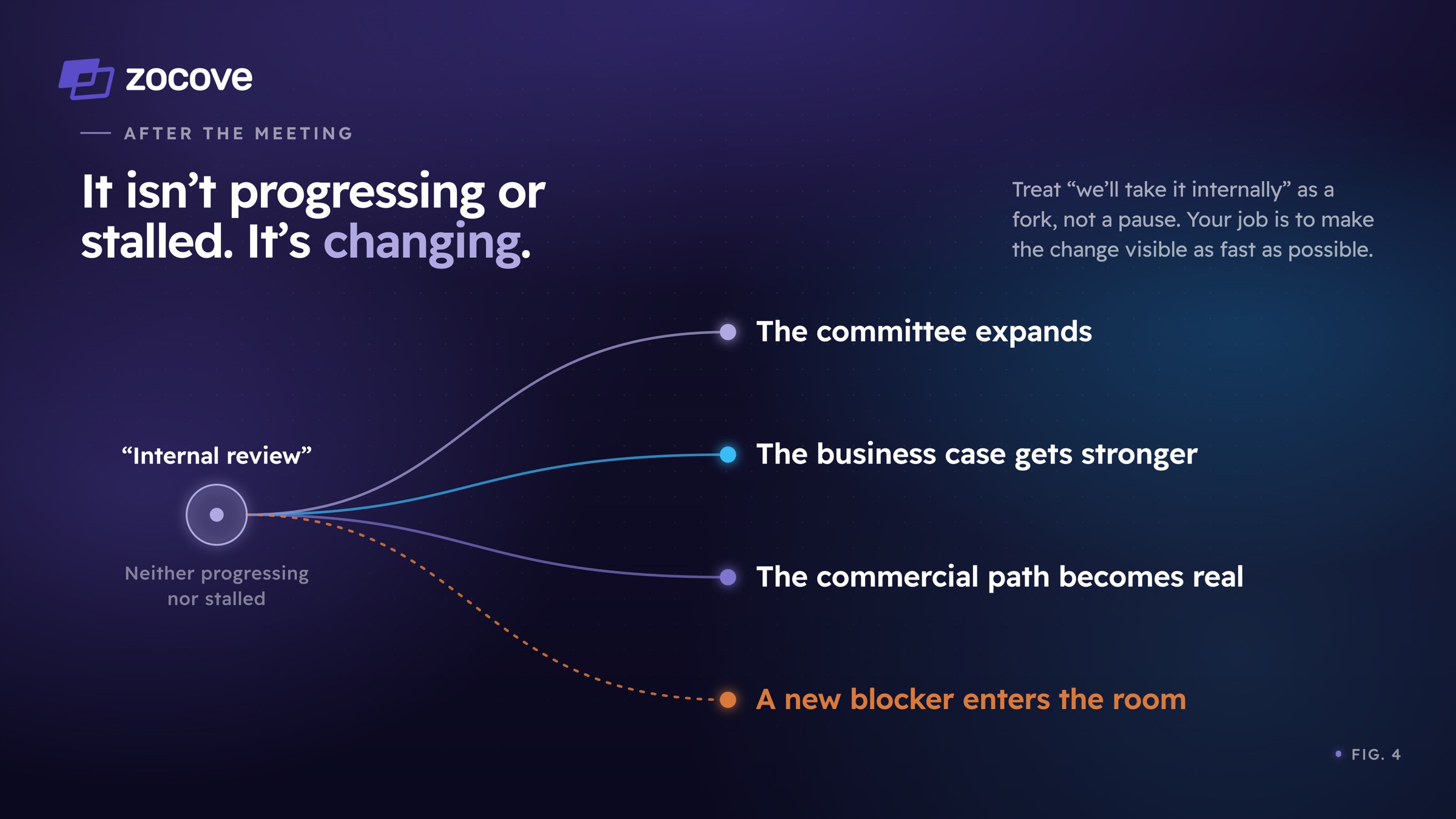
The buying committee may expand. The business case may get stronger — or get picked apart. The commercial path may become real, or procurement may raise something no one anticipated. A new blocker may enter the room that nobody mentioned to you.
Your job is to make the change visible as quickly as possible. Not by sending "any update?" emails, but by following up with a useful question: What did the group need more confidence in — the business case, the technical approach, or the rollout plan? That's easier to answer than a status check, and it gives your buyer permission to surface the real issue.
You can also watch buyer engagement between meetings: is your champion still sharing content? Has anyone new joined the conversation? Is the economic buyer in the deal now, or have they gone quiet? Those signals surface deal health faster than any stage update.
A better way to think about buyer enablement
The strongest AEs don't just run meetings well. They prepare buyers to run the meetings they can't attend.
That means making the internal sale easier — giving champions language they can use, packaging material around decisions rather than product areas, anticipating the objections that appear when you're not in the room, and creating clear paths for new stakeholders to engage.
The internal meeting will still happen without you. That's normal. The goal isn't to get invited. The goal is to make sure your buyer walks in prepared to move the decision forward.