Why most mutual action plans fail
Most MAPs don't fail because the plan was wrong — they fail because nobody used it. What makes a mutual action plan move deals instead of dying in an inbox.
 4 min read
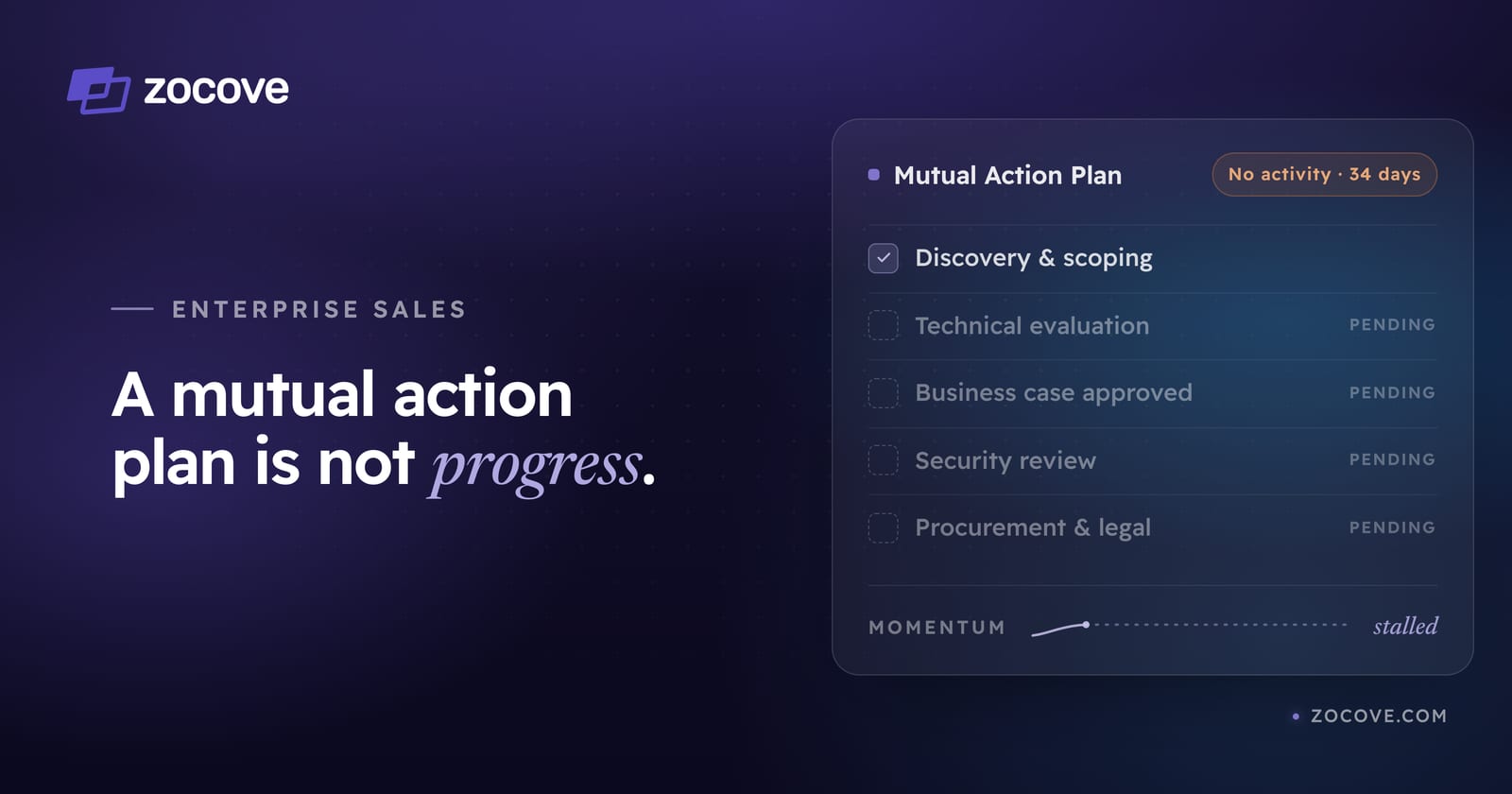
A mutual action plan is supposed to do three things: create structure, set accountability, and line the buyer and seller up behind one path to a close. That's the theory.
In practice, most of them fail — and not because the plan was wrong. The milestones were fine. The dates were reasonable. They failed because the plan became a document instead of a working agreement. That difference is what decides whether a deal moves.
The spreadsheet problem
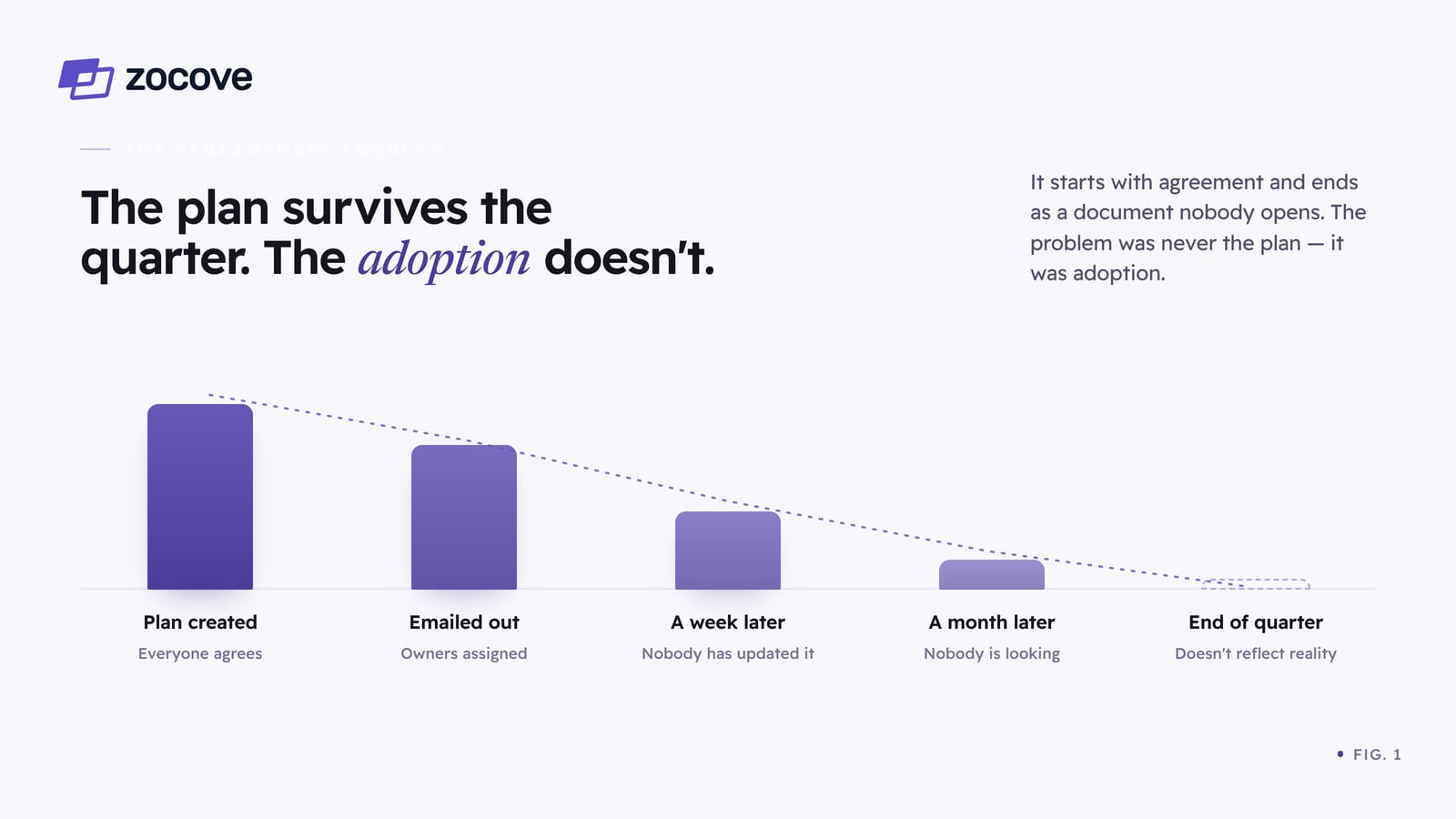
Every MAP starts well. You name the milestones, assign the owners, set the dates, and everyone nods. Then you email it out — and that's usually where it dies.
A week later, nobody's touched it. A month later, nobody's opened it. By quarter-end the plan still exists, but it has nothing to do with what's actually happening. The plan was never the problem. Adoption was. A MAP nobody uses gives you the illusion of alignment and none of the benefit.
More detail won't save it
When a MAP stalls, the instinct is to add to it — more tasks, more milestones, more dependencies, more documentation. It rarely helps. Usually it makes things worse.
Your buyer is already juggling other priorities, projects, and people. One more project plan doesn't create momentum; it creates homework. The best MAPs aren't the most detailed. They're the most used.
A plan is not progress
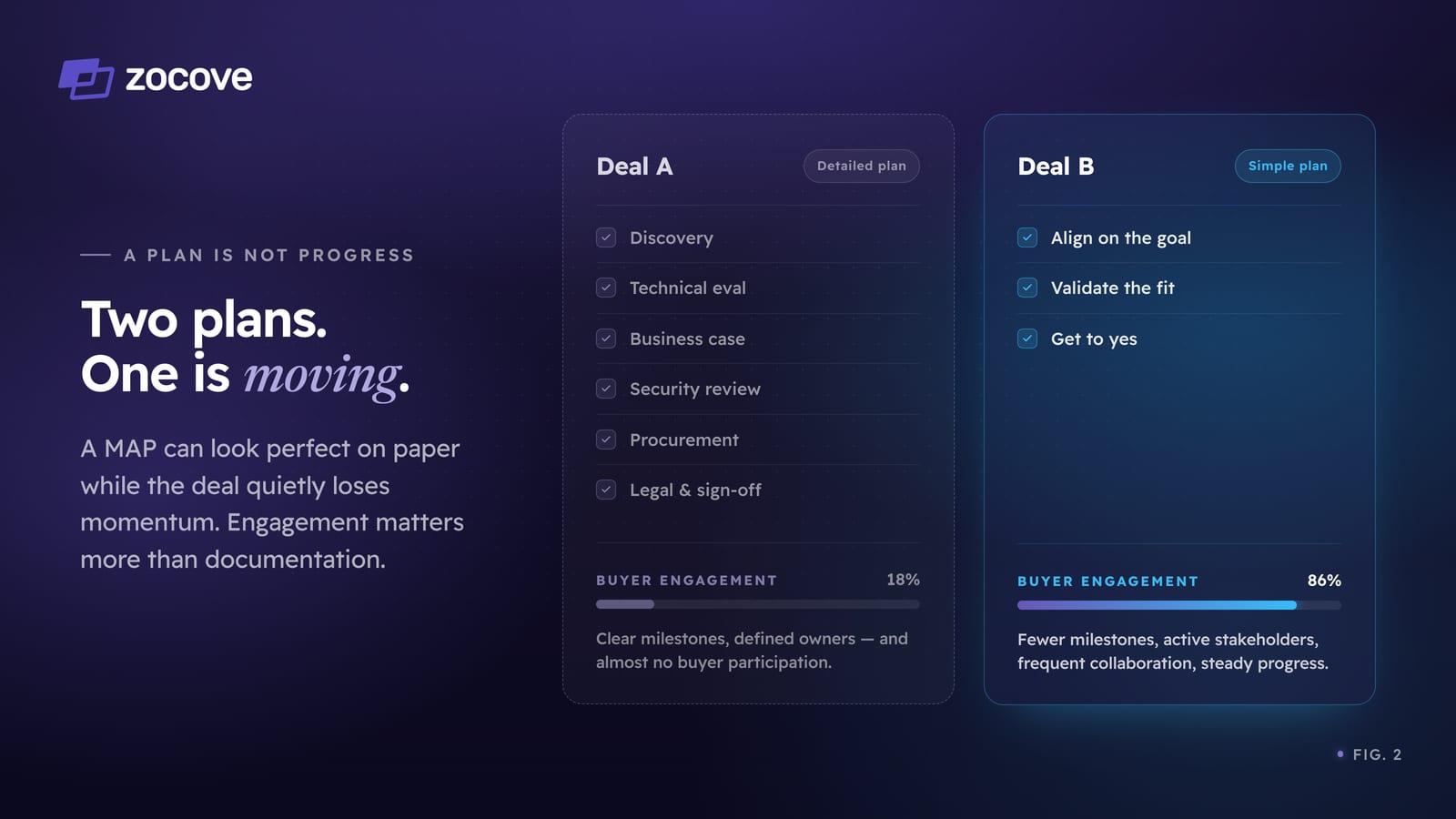
This is the part most sellers miss. A plan is evidence of intent. Progress is evidence of action. They are not the same thing — and a MAP can look flawless on paper while the deal quietly flatlines.
Picture two deals:
Deal A — a detailed plan, clear milestones, named owners, and almost no buyer engagement.
Deal B — a simple plan, active stakeholders, regular back-and-forth, steady progress.
Every seller wants Deal B. Engagement beats documentation every time.
Why most MAPs fail
Across hundreds of enterprise deals, the failures rhyme. Almost all of them trace back to one of four patterns — and none of them are about how detailed the plan was.
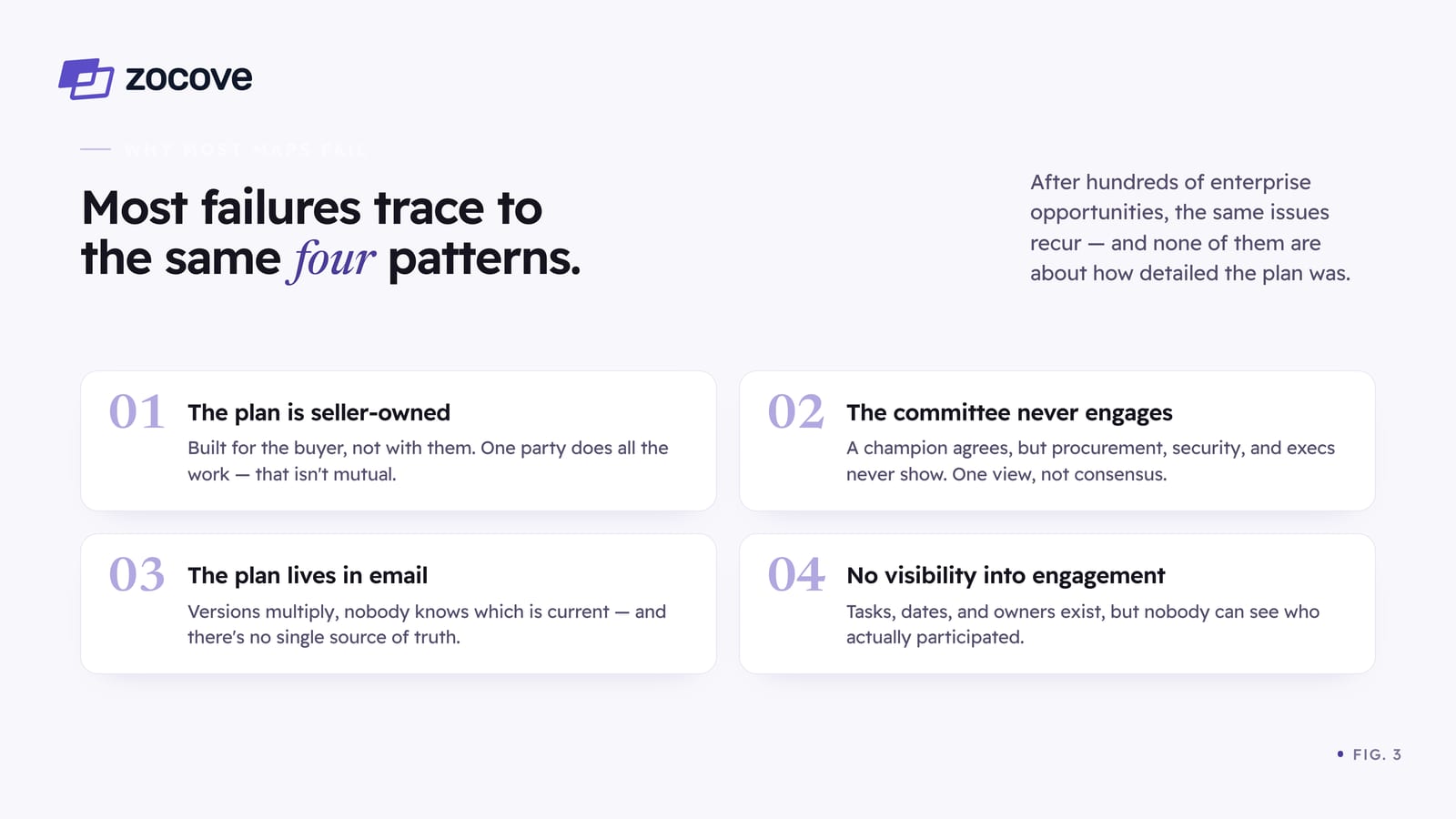
The plan is seller-owned
Most MAPs are built for the buyer, not with them. You build it, you update it, you review it, and your buyer nods along. That's not mutual — it's administrative. Real plans have shared ownership, where both sides contribute and both sides get something out of it. Without that, engagement doesn't last.
The buying committee never shows up
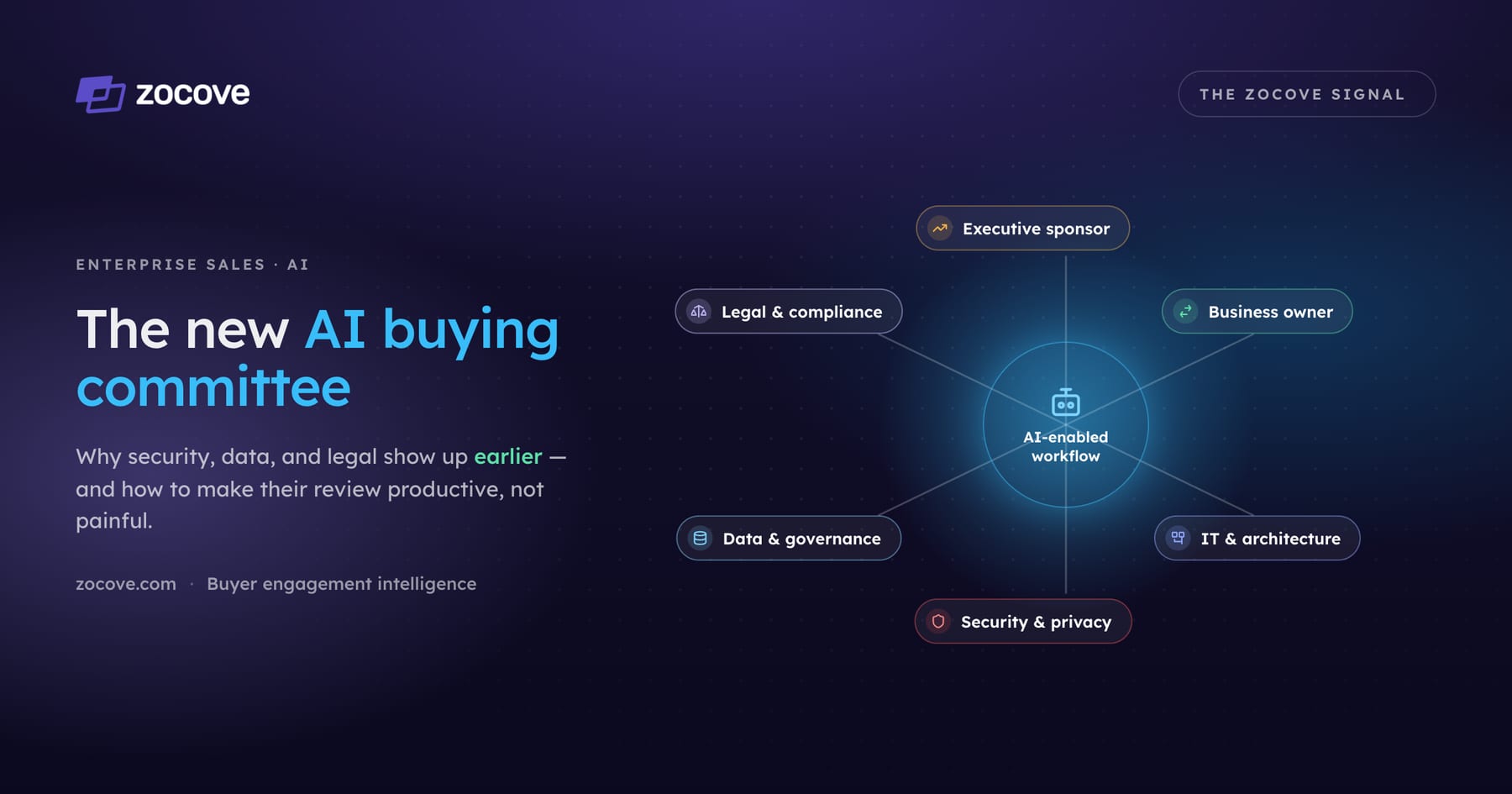
Plenty of plans are built around a champion. They agree to the timeline, sign off on the milestones, participate — and the deal still stalls. The reason is usually the same: the rest of the buying committee never engaged. Procurement wasn't looped in, security wasn't aligned, the execs weren't watching. The plan captured one person's view, not the organization's. A MAP can't manufacture alignment that isn't there — it can only show you whether it exists.
The plan lives in email
You attach the MAP to an email. You send a revised copy later. Another version shows up the next month. Now there are four, nobody's sure which is current, and no one trusts the dates. The content was never the issue — access was. Collaboration breaks the moment there's no single source of truth.
Nobody can see the engagement
This is where most teams are blind. Tasks, deadlines, owners — all there. But who actually opened the plan? Who participated? Which stakeholders went quiet, and when? Without that, a MAP is a static document. With it, the same plan becomes an early-warning system.
Every plan is sending you signals
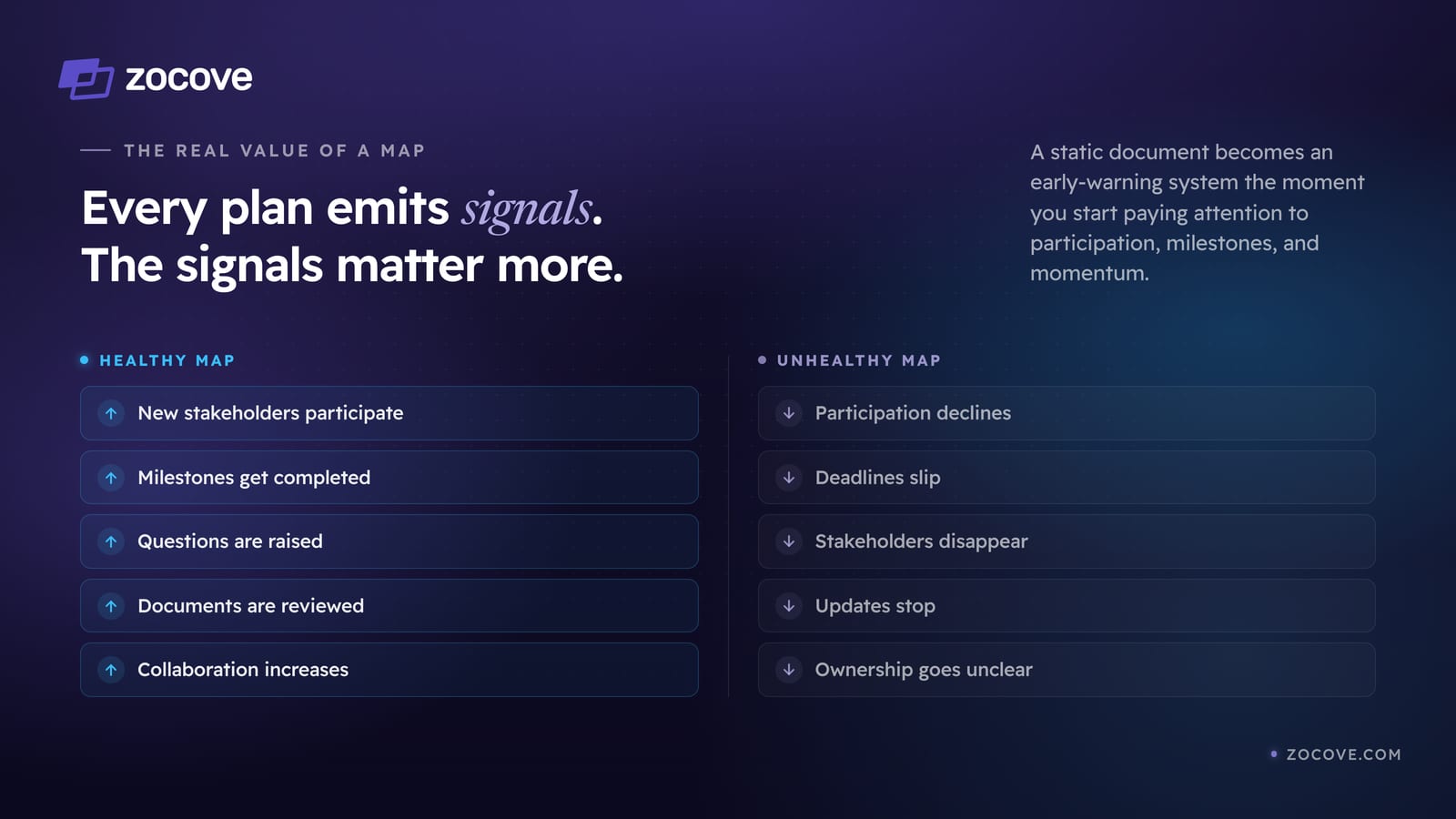
The most underrated thing a MAP does has nothing to do with project management. A healthy plan throws off signals: new stakeholders join, milestones close, questions come up, documents get opened, collaboration picks up. So does an unhealthy one — participation drops, dates slip, people disappear, updates stop, ownership blurs.
The plan matters. The signals matter more.
What the best teams do differently
Top sellers don't treat the MAP as paperwork — they treat it as a momentum read. They build it with the buyer, keep it simple, pull in the full committee, and watch engagement instead of administering tasks. A healthy plan tends to travel with real stakeholder engagement, committee alignment, executive air cover, and forecast confidence you can actually defend. An unhealthy one tells you the opposite — early, while you can still do something about it.
That's the real value of a mutual action plan. Not certainty. Visibility. A plan nobody touches is just a spreadsheet. A plan that drives collaboration — and shows you the moment it stops — is the difference between a deal that closes and one that slips away without a word.